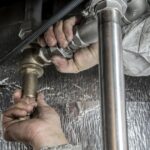
Grease trap cleaning is one of the least visible jobs in a Dubai kitchen, and one of the most regulated. Regular grease trap cleaning stops fats, oils and grease from reaching the sewer, keeps your drains flowing and keeps your business on the right side of Dubai Municipality. This guide explains who must have a grease trap, what the municipality guideline requires, how a professional clean works and where the waste goes. It also covers the records to keep and how to choose a cleaning plan.
Key Takeaways
- Dubai Municipality requires food establishments to install approved grease traps and to clean them regularly and at least twice a month.
- Professional grease trap cleaning follows set steps, and the waste may only go to a municipality approved treatment and recycling plant.
- Good commercial kitchen FOG management combines scheduled cleaning, clear records and daily habits that keep grease out of the drains.
What a Grease Trap Does and Who Must Have One in Dubai
A grease trap is a device that separates fats, oils and grease, often called FOG, from kitchen wastewater before it reaches the sewer. Hot, greasy water flows into the trap and slows down. As it cools, grease floats to the top and food solids sink to the bottom. Cleaner water then leaves through the outlet. Over time, the grease layer and the sludge grow until the trap must be emptied.
Dubai Municipality treats grease traps as the first line of defence for the city’s sewage network. Its guideline for maintaining and cleaning grease traps describes them as the first protection shield for sewage networks and treatment plants, because they prevent blockages caused by accumulated fat. The same guideline says Dubai was the first city in the Middle East to run an integrated system for separating, transporting and recycling food oil and grease waste.
The rules apply to food establishments. The guideline defines these as all producers of food oil and grease waste, such as restaurants, coffee shops, cafeterias, labour camps and similar sites, and places them under Local Order No. 8 of 2002. Dubai Municipality compels all of them to install traps that separate grease and oil before wastewater enters the sewer.
In practice, that covers most commercial kitchens. Restaurants, cafes, bakeries, catering units, hotels, hospitals, schools and kitchens inside malls all produce FOG. Large sites such as malls, hotels and big restaurants often use larger units, which the guideline calls grease interceptors. Smaller kitchens usually have under-sink grease traps close to the source.
Without a working trap, grease cools inside the pipes and sticks to the walls. It mixes with food waste and wipes and slowly narrows the pipe. In the worst cases it forms solid masses known as fatbergs, which are costly to remove. Grease trap cleaning keeps the trap able to do its job, so the problem stays inside a unit that is designed to be emptied.
Hygiene is the other reason grease trap cleaning matters. A full trap holds decaying food waste and grease in a warm kitchen. That creates strong odours and an unpleasant working environment, and overflowing traps can spill dirty water onto kitchen floors. Regular grease trap cleaning keeps the unit below its limit, so it separates FOG efficiently and stays out of sight and out of mind for your team and your guests.
You may also hear the job called fat trap cleaning. Fat trap and grease trap are two names for the same device, and the rules and methods are identical. In this guide we use grease trap throughout, because that is the term Dubai Municipality uses in its guideline and the term most contractors use in their contracts and reports.
Dubai Municipality Rules for Grease Trap Cleaning
The main reference is Dubai Municipality’s guideline for maintaining and cleaning grease traps and transporting their waste. The second edition of the guideline, issued in November 2021 by the Sewage Treatment Plants and Network Department, sets out the duties of food establishments, cleaning companies and recycling plants. Three rules matter most for a kitchen manager.
Approved Grease Traps and Approved Suppliers
Grease traps and their suppliers are approved by Dubai Municipality. The guideline says it is prohibited to install unapproved grease traps, or to buy or install them through an unapproved supplier. The trap size is set through the Building Permits Department according to the type and size of the business, so a trap should never be chosen on price alone.
Cleaning at Least Twice a Month
The guideline states that the trap is cleaned regularly and at least twice a month. That is a minimum, not a target. A busy kitchen that fries, roasts or washes many pans may fill its trap faster. Your cleaning contractor should look at how quickly the trap fills and recommend whether you need more visits.
Violations Under Local Order No. 8 of 2002
A violation can be issued to anyone who does not install a grease trap, connects wastewater directly to the sewer on purpose, fails to clean the trap regularly, interferes with the trap’s operation, or does not cooperate with inspectors and provide the required documents. That last point is why records matter so much.
The guideline quoted here is the second edition from November 2021. Dubai Municipality also lists a 2023 revision, so check the latest version on the Dubai Municipality website or with your contractor before you plan.
Sizing is also set out in the guideline. Dubai Municipality chooses the grease trap based on the water flowing into the sewer, the number of washbasins, cleaning panels and dishwashers installed, using the formula GTT equals criteria score multiplied by water flow multiplied by pipe size. An undersized trap fills quickly and needs more frequent grease trap cleaning, so sizing and cleaning should be planned together when a kitchen is fitted out or expanded.
How Professional Grease Trap Cleaning Works, Step by Step
Professional grease trap cleaning is more than pumping out a tank. The Dubai Municipality guideline sets out safety rules and technical steps that cleaning staff must follow. Knowing them helps you judge whether a contractor is doing the job properly.
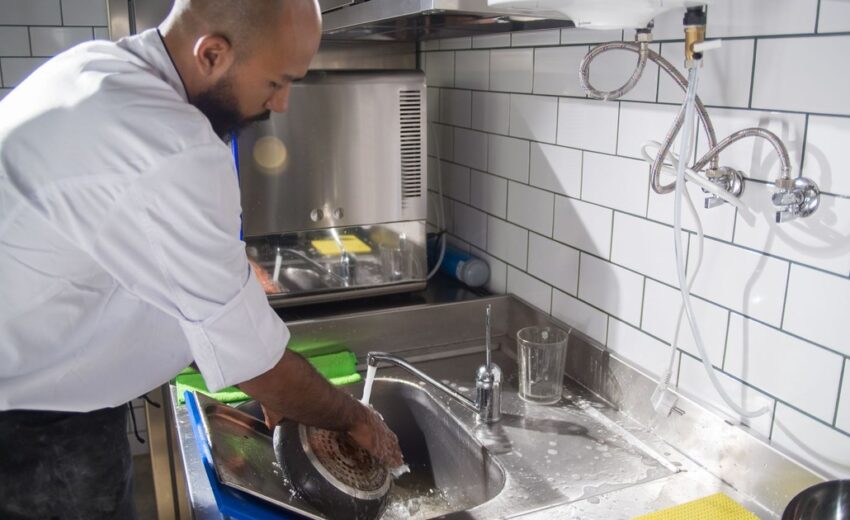
Safety comes first. The guideline requires cleaning companies to use a hydrogen sulphide gas detector at the trap being cleaned, and to make sure workers understand the dangers of the gas and confined space procedures. Barriers must be placed around the work area, and the crew must speak to the person in charge on site before starting, so staff stay clear.
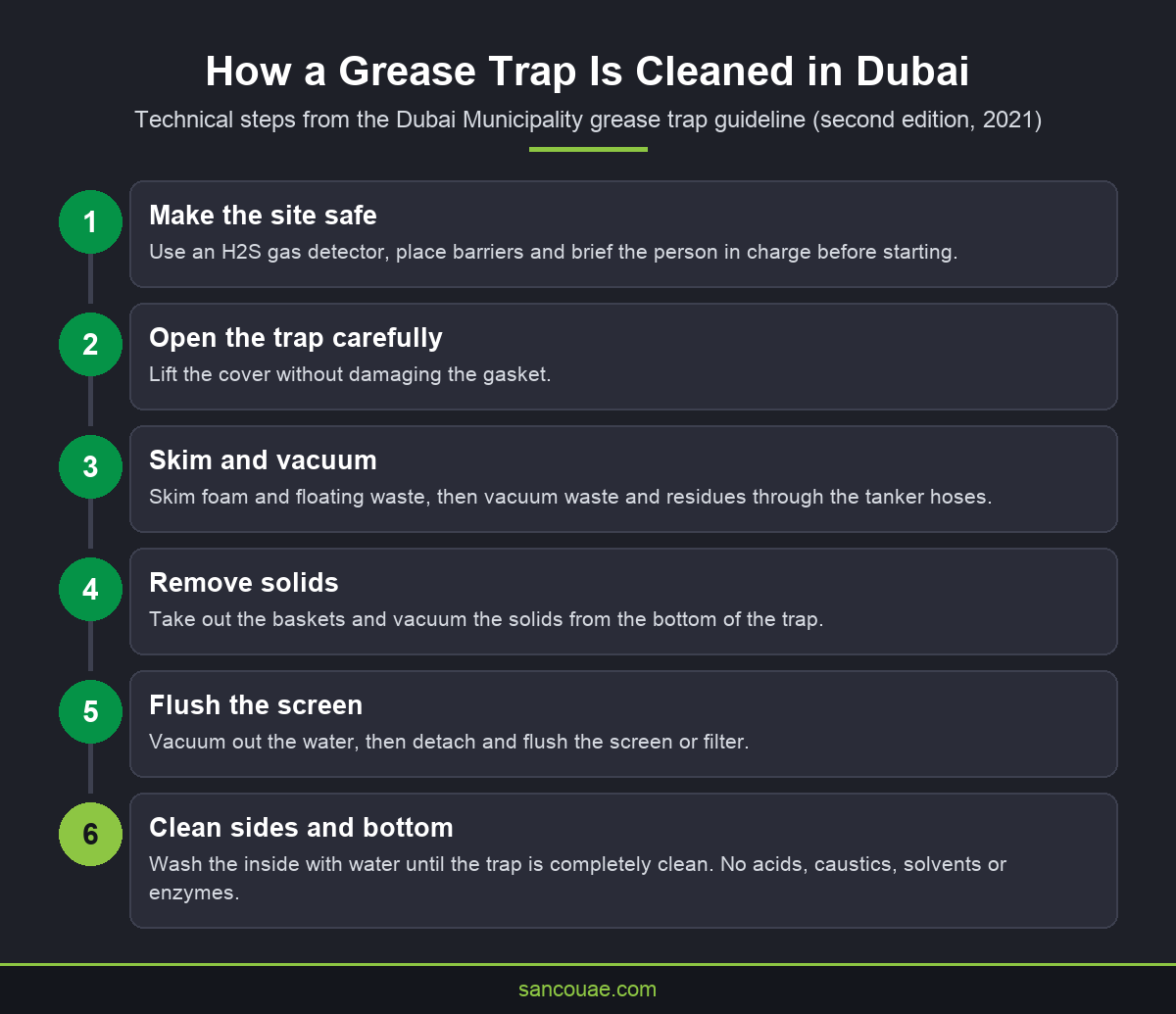
The cleaning itself follows six steps. The crew lifts the cover carefully to avoid damaging the gasket. They skim the foam and floating waste, then vacuum the waste and residues through the tanker’s hoses. They remove the baskets and vacuum the solids from the bottom. They vacuum out the water, then detach and flush the screen or filter. Finally, they clean the sides and bottom of the trap with water until it is completely clean.
One rule surprises many kitchen owners. The guideline strictly forbids the use of acid, caustics, solvents, enzymes or emulsifying agents when cleaning grease traps. The guideline does not explain why, but a common concern is that such products loosen grease so it passes into the sewer and sets again further down the line. Physical removal by vacuum is the method the guideline describes.
At Sanco, our technicians vacuum, pump and haul the liquid waste and sludge from the grease trap using 1,000-gallon tankers, suction pumps and portable suction pumps. We record the volume of grease removed and provide FOG reports after each visit. You can read how our grease trap cleaning service works on our service page.
What should you see during a visit? The crew should arrive in a properly marked tanker, set up barriers, check for gas and explain what they are about to do. After the work, the trap should be empty, the cover sealed correctly and the area left clean. You should receive a report showing what was removed. If any of these steps are missing, ask questions. Good grease trap cleaning is visible, documented and tidy.
Different traps need different equipment. Small under-sink traps can often be emptied with portable suction pumps, which avoids running long hoses through the kitchen. Larger outdoor traps and grease interceptors need a tanker with a powerful vacuum. A good contractor will look at your traps first and plan the right equipment, so the visit is quick and the kitchen is disrupted as little as possible.
Where the Waste Goes: Approved Plants, Gallon Records and Coupons
Grease trap cleaning does not end when the tanker leaves your site. Dubai Municipality controls what happens to the waste next, and these rules protect you as the waste producer. If your waste is dumped illegally, the problem can come back to your business.
Companies that clean grease traps and transport the waste must hold a valid Dubai licence for that activity. The guideline lists activity code 900017, grease traps cleaning and waste removal. Their vehicles need prior approval and inspection by the Sewage Treatment Plants and Network Department. Every company must also register on the municipality’s FoodWatch platform.
The vehicles themselves are tightly specified. Tankers carrying grease trap waste are painted orange, with a maximum capacity of 1,000 gallons unless an exception is approved. They must carry safety equipment, show the company name and contact number, and use a GPS tracking system approved by Dubai Municipality.
The waste may only be discharged at a Dubai Municipality approved treatment and recycling plant. Staff at the plant issue invoices that record the source of the waste and the amount in US gallons, and vehicles must carry a coupon book before entering. Waste must be discharged immediately, and moving it from one tanker to another is forbidden.
For a kitchen manager, the practical point is simple. Ask your contractor how they document disposal. A professional company should be able to show the volume collected from your site and confirm that it went to an approved plant.
Location rules apply too. The guideline strictly forbids bringing grease trap waste collected in other emirates into Dubai for disposal, or taking Dubai waste elsewhere, unless both emirates grant a special permit. If your business runs kitchens in several emirates, check that each site’s grease trap cleaning and disposal follows the rules of the emirate where it operates.
There is an environmental benefit as well. The guideline explains that grease and oil waste from hotels, restaurants, malls and coffee shops is recycled into a useful product at the treatment plant, under a partnership between Dubai Municipality and the private sector. When your grease trap cleaning contractor follows the rules, your kitchen waste becomes part of that recycling programme instead of a blockage in the city’s sewers.
Records Your Kitchen Should Keep
Inspectors can ask for documents, and the guideline lists failing to provide required documents as a violation. A simple, organised file makes inspections quick and shows that your FOG management is under control.
Service Reports and Volumes
Keep a report for every grease trap cleaning visit. It should show the date, the trap or traps cleaned, the volume removed and the technician’s notes on the trap’s condition. Volume trends are useful. If the amount removed keeps rising, your schedule may need more visits or your kitchen may need better daily habits.
Contracts and Contractor Documents
Keep a copy of your service contract and your contractor’s licence details. If a new supplier installed your trap, keep proof that the trap and supplier are approved. These documents answer the most common questions an inspector will ask.
Your Own Kitchen Log
Many kitchens also keep a simple internal log. Staff note slow drains, odours, overflows and any emergency callouts. This log helps your contractor spot patterns and helps you show that problems were reported and fixed quickly.
Keep all of these documents in one place, either a folder in the kitchen office or a shared digital drive. Give one person responsibility for filing each grease trap cleaning report as soon as it arrives. When an inspector visits, that person can produce the full history in minutes, which makes a far better impression than searching through emails.
Signs Your Grease Trap Needs Attention Between Visits
A good schedule prevents most problems, but kitchens change. A new menu, a busy season or a new dishwasher can all increase the load. Watch for these warning signs and call your contractor early rather than waiting for the next visit.
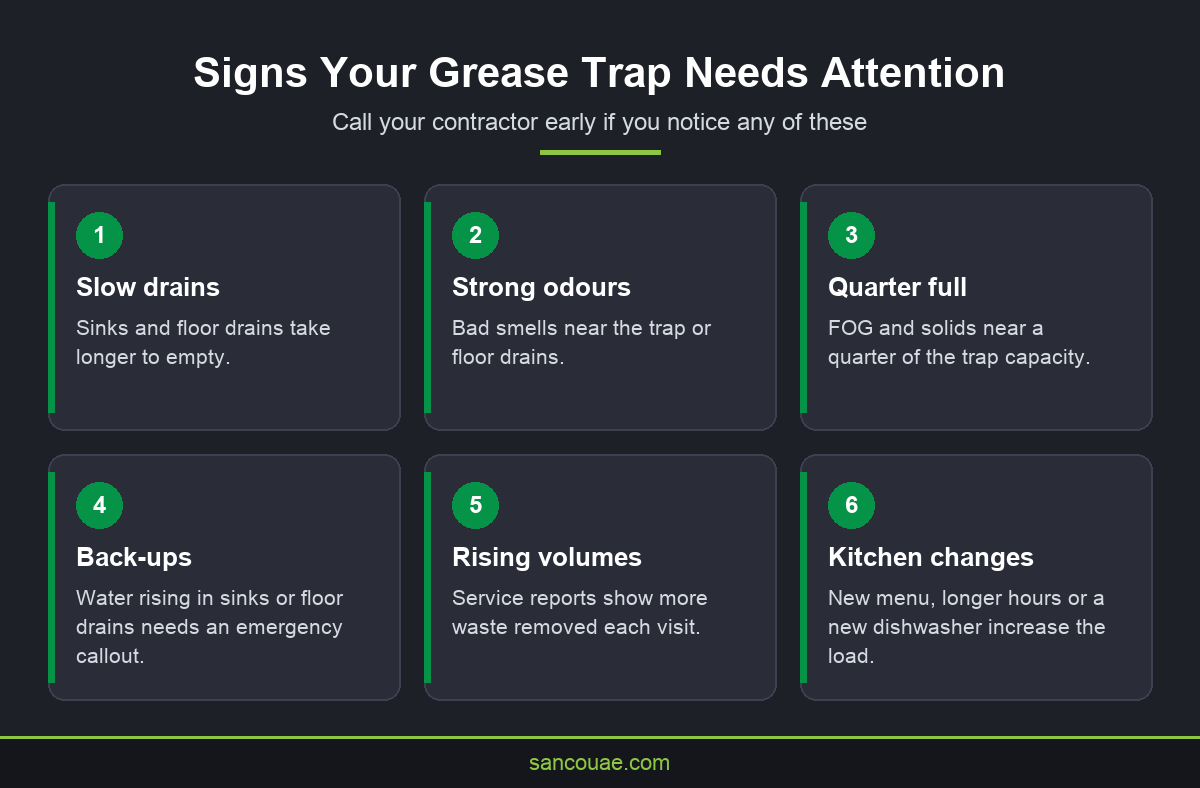
Slow drains are usually the first sign. When sinks take longer to empty, grease or solids are restricting the flow. A strong odour near the trap or floor drains suggests the trap is full or that waste has been left too long. Water backing up into floor drains or sinks needs an emergency callout. Gurgling sounds from drains, or grease visible in floor drains and outside manholes, are further signs that FOG is getting past the trap and building up in the pipes beyond it.
A widely used rule of thumb, also used on our service page, is to empty the trap before fats, oils, grease and solids reach about a quarter of its capacity. Above that level, the trap separates less effectively and more grease escapes into the pipes.
Seasonal peaks deserve attention as well. Holiday periods, special events and longer opening hours all increase cooking and washing. Many kitchens produce more grease in these weeks, so it can make sense to add an extra grease trap cleaning visit before a known busy period rather than risk an overflow during it.
If the line beyond the trap is already blocked, cleaning the trap alone will not clear it. In that case, high pressure drain line jetting can remove the build-up, and a CCTV drain survey can show where the problem sits.
Choosing a Grease Trap Cleaning Plan
Most food businesses choose a service plan rather than calling a contractor each time. A plan fixes the schedule, keeps records consistent and avoids missed visits during busy periods. It also makes budgeting easier.
At Sanco, we design a grease trap maintenance schedule around your business, on a 3-month, 6-month or annual plan. Visits are planned to meet the municipality minimum and your actual grease load. We also offer 24/7/365 emergency callouts for overflows and blockages.
When you compare grease trap cleaning services, look beyond the visit price. Ask how the contractor sets the frequency, what the report includes, how disposal is documented and how fast they respond to emergencies. Ask whether they can also handle related work, such as drain jetting or trap repairs, so one team understands your whole system.
Planned maintenance usually costs less than emergencies. A blocked trap during service can force a kitchen to close or cut capacity while the problem is fixed. Regular grease trap cleaning reduces emergency callouts and repairs, and it protects the income you would lose from a disrupted service. That is why most food businesses treat the plan as an operating cost, not an optional extra.
Review the plan once a year. Compare the volumes removed, any emergency callouts and any changes to your menu or opening hours. If the trap is filling faster than before, add visits. If it is consistently light, keep the schedule at the municipality minimum. A yearly review keeps your grease trap cleaning plan matched to how your kitchen really works.
Daily habits matter too. Scrape plates into the bin before washing. Collect used fryer oil separately through a cooking oil collection service instead of pouring it down the sink. In coffee areas, a coffee catcher stops grounds from settling in the drains. These steps reduce the load on the trap and can reduce how often it fills.
How Sanco Supports Grease Trap Cleaning and FOG Compliance
Sanco Environmental Services has worked with Dubai food businesses since 2012. Grease traps are at the centre of what we do. We supply and install grease traps, clean and maintain them, and provide related drainage and tanker services, so your kitchen can work with one team from installation to disposal.
Our grease trap supply and installation service includes free technical support, inspections of existing systems and free quotations. Our SG1, SG2 and SG3 stainless steel under-sink grease traps are approved by Dubai Municipality, and we also offer PVC outdoor traps for larger flows.
For cleaning, we record the volume of grease removed, provide FOG reports and arrange disposal at a municipality approved plant. Our tanker service supports larger sites and emergencies. Together, these services give restaurants, hotels and other food businesses a complete approach to restaurant grease trap cleaning and FOG management.
Getting started is simple. Tell us about your kitchen, the type of trap you have and how busy you are. We will inspect the trap, recommend a grease trap cleaning schedule that meets the municipality minimum and your real load, and send a free quotation. If you are opening a new kitchen, we can also advise on the right trap before installation.
Conclusion
Grease trap cleaning protects your drains, the city’s sewage network and your business. Dubai Municipality requires approved grease traps and cleaning at least twice a month, and it controls how the waste is transported and recycled. Choose a plan that matches your real grease load, keep every service report and build simple kitchen habits that keep FOG out of the drains. To arrange a site visit or set up a maintenance plan, request a free quote from Sanco.
Frequently Asked Questions
How often is grease trap cleaning required in Dubai?
The Dubai Municipality guideline says grease traps must be cleaned regularly and at least twice a month. Busy kitchens may need more visits, so your contractor should set the schedule based on how quickly your trap fills.
Which businesses need a grease trap in Dubai?
Dubai Municipality requires food establishments that produce food oil and grease waste to install grease traps. Its guideline names restaurants, coffee shops, cafeterias and labour camps, and similar sites such as hotels and catering kitchens.
Can I clean my grease trap with chemicals or enzymes?
Not during cleaning. The Dubai Municipality guideline strictly forbids acids, caustics, solvents, enzymes and emulsifying agents when cleaning grease traps. The waste should be physically removed by vacuum and the trap washed with water.
Where does grease trap waste go after collection?
It must be discharged only at a Dubai Municipality approved treatment and recycling plant. The plant records the source of the waste and the volume in US gallons, which gives a clear trail from your kitchen to recycling.
What is the difference between fat trap cleaning and grease trap cleaning?
There is no real difference. Fat trap and grease trap are two names for the same device, which separates fats, oils and grease from kitchen wastewater. The cleaning process and the municipality rules are the same.
What records should a restaurant keep for grease trap cleaning?
Keep a service report for every visit showing the date, volume removed and condition of the trap. Also keep your contract, your contractor’s licence details and proof that your grease trap is an approved model.
What happens if a grease trap is not cleaned regularly?
Grease escapes into the pipes, causing slow drains, odours and blockages. The Dubai Municipality guideline also lists failure to clean the trap regularly as a violation under Local Order No. 8 of 2002.
Does a full grease trap affect kitchen exhaust cleaning?
They are separate systems, but both collect grease from cooking, so a greasy kitchen usually needs attention in both. Many kitchens schedule them together. Our kitchen exhaust cleaning service covers hoods, filters and ducts.
Can one company handle grease traps and sewage tanks?
Yes. Sanco cleans grease traps and also provides sewage tank and sump pit cleaning, so one team can plan maintenance across your kitchen, drain lines and building drainage, with one point of contact.