Grease trap installation is one of the first technical decisions in any new Dubai kitchen. Get the grease trap installation right and the trap quietly separates fats, oils and grease for years. Get it wrong and you face blockages, frequent emptying and trouble with inspectors. This guide explains why approval comes first, how size is decided, how under-sink and outdoor traps differ, and what happens during and after installation, so you can plan the work with confidence.
Key Takeaways
- Dubai Municipality approves both grease traps and their suppliers, and installing an unapproved trap is prohibited.
- Trap size is set through the Building Permits Department, based on water flow, fixtures and pipe size.
- Under-sink stainless steel traps suit individual sinks, while larger outdoor units handle higher flows. Plan cleaning access from day one.
Why Grease Trap Installation Starts With Approval
In Dubai, choosing a grease trap is not a free choice between products. The Dubai Municipality grease trap guideline states that grease traps and their suppliers are approved by the municipality. It also states that it is prohibited to install unapproved grease traps, or to buy or install them through an unapproved supplier.
That makes the supplier as important as the product. Before you sign a quotation, ask the supplier to confirm which of their models are approved and to show the approval document. A municipality approved grease trap supplier should be able to answer this quickly and in writing.
The rule exists for a reason. A grease trap is the first barrier between a kitchen and the public sewer. The guideline calls it the first protection shield for sewage networks and treatment plants. A poorly made or wrongly sized unit lets grease escape, and the blockage it causes may be far from your kitchen but still traced back to it.
Approval also protects your investment. Replacing a trap after an inspection is far more disruptive than choosing the right one before fit-out. Treat grease trap installation as part of your kitchen design, not as a plumbing detail to settle later.
The same applies when you take over an existing kitchen. Before you open, check that the trap already in place is an approved model, that it suits your new menu and that it has been cleaned. A new tenant inherits the old trap’s condition, so a quick inspection before handover can save a difficult first month. If the trap is unsuitable, plan a new grease trap installation before opening rather than after the first blockage.
How Grease Trap Size Is Decided
Size is not a guess, and it is not chosen by the cheapest quotation. According to the guideline, installation is supervised by the Building Permits Department, which chooses the size of the trap according to the type and size of the commercial activity.
The guideline also explains the basis. Dubai Municipality considers the amount of water flowing into the sewer, the number of washbasins, cleaning panels and dishwashers installed, and applies a formula: GTT equals criteria score multiplied by water flow multiplied by pipe size. The detailed method must be reviewed to set the right size for each site.
In practice, this means you should prepare a clear list of fixtures before the sizing step. Count every sink, pot wash, dishwasher and floor drain that will connect to the trap. Note the menu and expected covers too, because a kitchen that fries and roasts produces more grease than one that mainly assembles cold food.
An undersized trap fills quickly and needs frequent emptying. An oversized trap costs more and takes up space. Getting the size right at the commercial grease trap installation stage keeps both cleaning costs and space under control.
Under-Sink vs Outdoor Grease Traps
Grease traps come in many sizes, but they fall into two broad groups. The guideline notes that large grease traps used for centres, malls, hotels and big restaurants are called grease interceptors. Smaller units sit close to the sinks they serve.
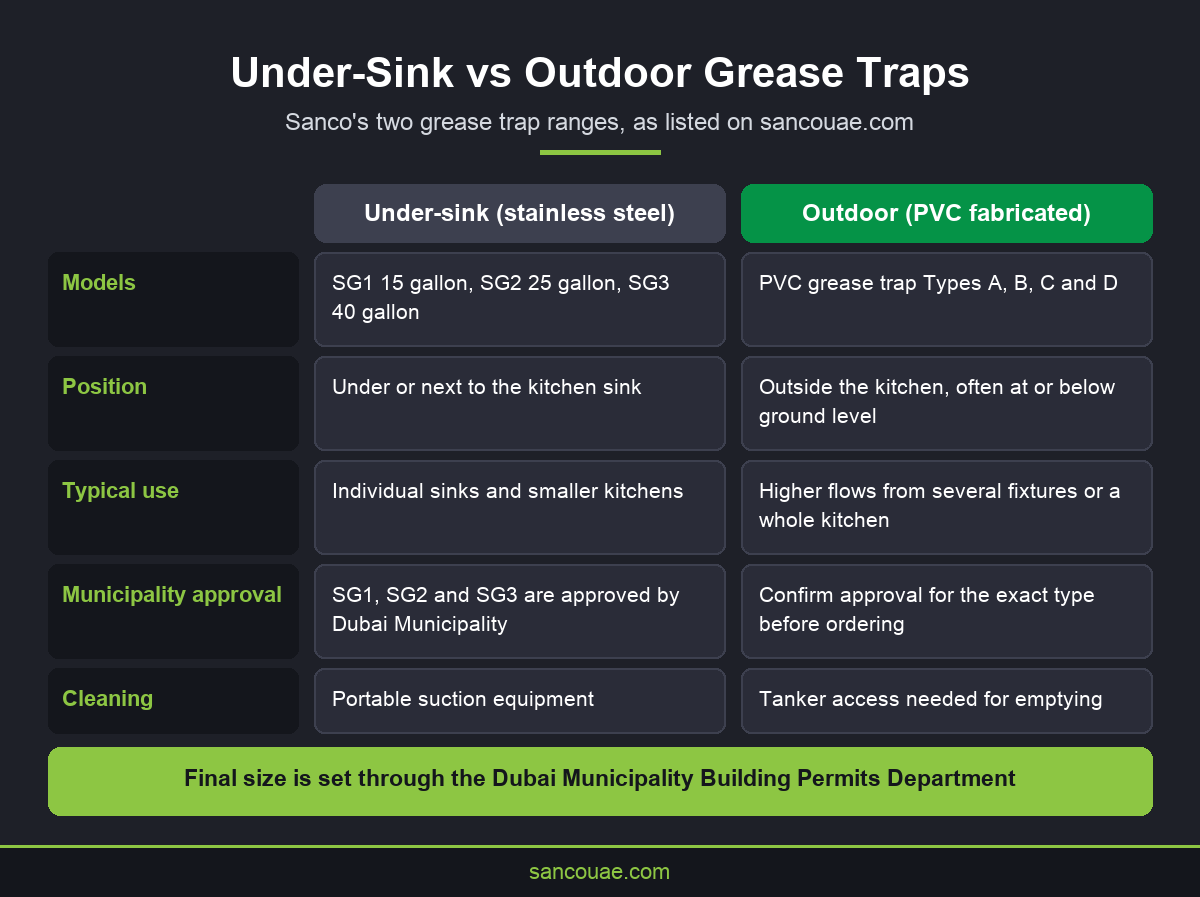
Under-sink traps are compact units fitted under or next to a sink. Sanco’s under-sink range is made from stainless steel in three sizes: SG1 at 15 gallons, SG2 at 25 gallons and SG3 at 40 gallons. These three models are approved by Dubai Municipality. If you are looking for a stainless steel under-sink grease trap supplier, check approval for the exact model you are buying.
Outdoor traps handle higher flows from several fixtures or a whole kitchen. Sanco’s outdoor range is fabricated in PVC, in Types A, B, C and D. Larger outdoor units are often set at or below ground level, so an underground grease trap installation needs safe access for emptying and a clear path for the cleaning tanker.
Many kitchens use both. Under-sink traps catch grease at the source, and an outdoor trap protects the main line. Your supplier should design the combination around your fixtures and the size set through the Building Permits Department.
Location affects cost and maintenance as much as size. A grease trap installation inside a tight kitchen must leave room to lift the cover and work safely. An outdoor unit must be reachable by the cleaning tanker without blocking deliveries or parking. Think about these practical points at the design stage, because moving a trap later is expensive.
The Grease Trap Installation Process
A well run grease trap installation follows a clear sequence. Each step reduces the risk of rework, delays or problems during inspection. The flow below shows a typical project.
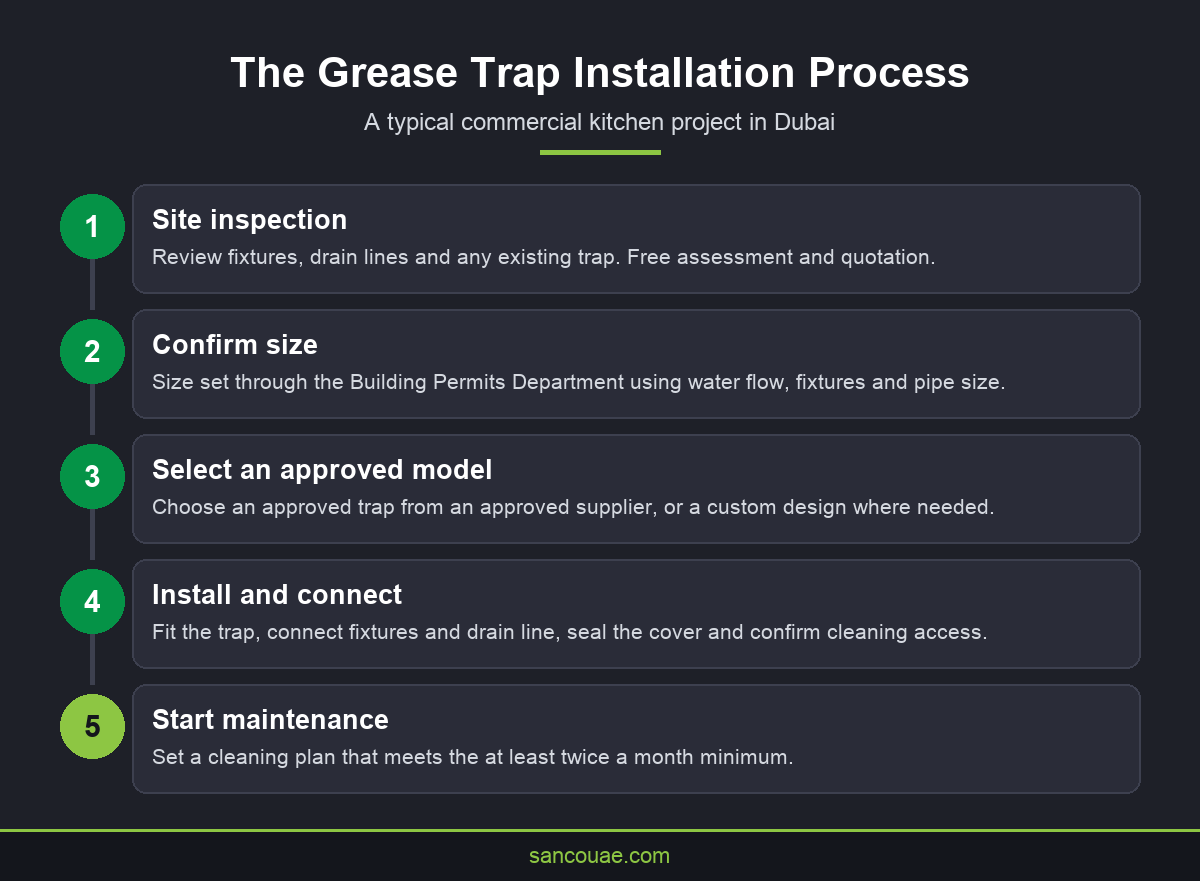
It starts with a site inspection. At Sanco, our grease trap installation team, part of our grease trap supply and installation service, offers free technical support, including inspections of existing systems, assessments and recommendations for maintenance, repair or upgrades. Every project receives a free quotation.
Next comes confirmation of size and model. Once the size is agreed, the approved model is selected and the installation is planned around kitchen operations. For kitchens that are already open, timing matters, so work can be planned to limit disruption. Sanco also offers 24/7/365 emergency supply and installation when a failed trap must be replaced quickly.
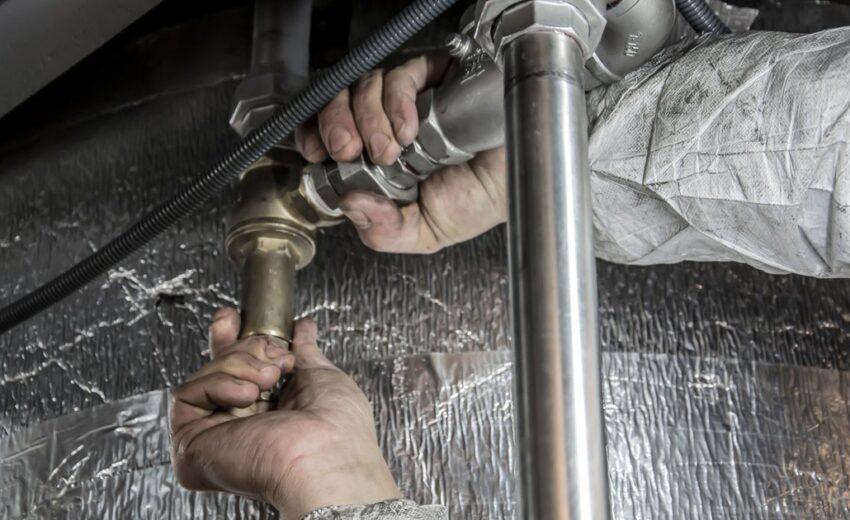
Installation then connects the trap to the kitchen fixtures and the drain line. Grease traps need no electricity. They work with the gravity flow of water, which keeps running costs low. Before handover, the trap should be checked, the cover sealed and the cleaning access confirmed.
Where a standard unit does not fit, a custom design may help. Sanco designs and delivers customised grease traps for specific client requirements. You can see the standard range on our grease trap products page.
Keep the paperwork from the project. File the quotation, the model details, any approval documents and the date of the grease trap installation. Inspectors may ask for them, and they make future upgrades easier to plan.
After Installation: Maintenance and Support
A new grease trap only protects your drains if it is maintained. The Dubai Municipality guideline requires grease traps to be cleaned regularly and at least twice a month. Plan the cleaning schedule before the kitchen opens, not after the first blockage.
Daily checks help too. Sanco’s installation page recommends checking the trap weekly and emptying it before the drain gets clogged. Kitchen staff should also scrape plates before washing and keep used fryer oil out of the sinks.
Our grease trap cleaning service can start as soon as your trap is installed, on a 3-month, 6-month or annual plan. One team then handles supply, installation and maintenance, which keeps responsibility clear.
Workshops, car washes and parking garages face a different problem: oil and fuel rather than food grease. For those sites, see our stainless steel grease and oil interceptors, which are built for vehicle and industrial drainage.
Conclusion
Grease trap installation in Dubai starts with approval and sizing, not with price. Use an approved trap from an approved supplier, let the Building Permits Department confirm the size, and choose under-sink or outdoor units to suit your fixtures. Plan cleaning access and a maintenance schedule before you open. To arrange a free site inspection and quotation for your kitchen, request a quote from Sanco and our team will advise on the right trap for your site.
Frequently Asked Questions
Do I need an approved grease trap in Dubai?
Yes. The Dubai Municipality guideline says grease traps and their suppliers are approved by the municipality. It is prohibited to install an unapproved trap or to buy or install one through an unapproved supplier.
Who decides the size of a grease trap?
The Building Permits Department supervises installation and chooses the size according to the type and size of the business. It considers water flow, the number of washbasins, cleaning panels and dishwashers, and pipe size.
What sizes are Sanco’s under-sink grease traps?
Sanco’s stainless steel under-sink range comes in three sizes: SG1 at 15 gallons, SG2 at 25 gallons and SG3 at 40 gallons. These three models are approved by Dubai Municipality and are designed to sit under or next to the kitchen sink.
What is the difference between a grease trap and a grease interceptor?
Both separate fats, oils and grease from wastewater. The Dubai Municipality guideline uses grease interceptor for the large units found in malls, hotels and big restaurants. Smaller units near sinks are usually called grease traps.
Does a grease trap need electricity?
No. Grease traps work with the gravity flow of water. Grease floats, solids settle and cleaner water leaves the outlet, so there is no power supply or moving part to maintain. This keeps running costs low and makes routine checks simple.
How soon after grease trap installation should cleaning start?
Straight away. The guideline requires grease traps to be cleaned regularly and at least twice a month. Agree a cleaning plan before the kitchen opens so the first visits are already booked when service begins.
Can Sanco replace a failed grease trap urgently?
Yes. Sanco offers 24/7/365 emergency supply and installation for situations where a damaged or failed trap must be replaced quickly to keep the kitchen running. Call our team at any time and we will advise on the fastest option for your site.
What if the drain is already blocked when the new trap goes in?
Clear the line first. Our high pressure drain line jetting service removes grease build-up from indoor and outdoor drains, so the new trap starts with clean pipes and flows freely from day one.
How long has Sanco worked with grease traps?
Sanco Environmental Services was established in 2012. We supply, install and clean grease traps for restaurants, hotels and other kitchens across Dubai. Read more about our company, mission and values on our about us page.