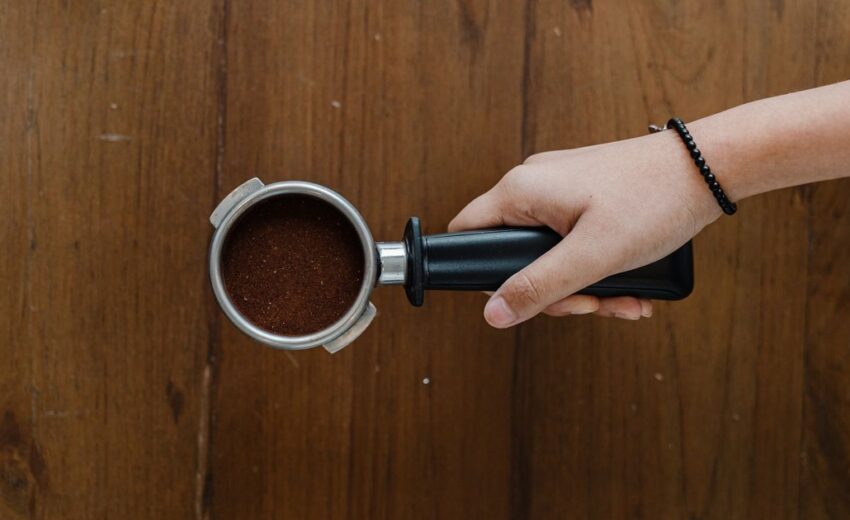
A coffee catcher is a small stainless steel filter unit that stops coffee grounds from reaching your drains. Every busy coffee counter rinses portafilters, knock boxes and jugs many times a day, and fine grounds go down the sink each time. A coffee catcher captures them at the source, before they settle in pipes or add to the load on your grease trap. This guide explains why grounds cause problems, how a coffee catcher works and where it makes sense.
Key Takeaways
- Coffee grounds do not dissolve in water. They settle in pipes and traps, and build up over time.
- A coffee catcher uses a fine detachable mesh to capture grounds before they enter the drain line.
- Fitting a coffee catcher is a simple part of commercial kitchen FOG management for cafes and coffee stations.
Why Coffee Grounds Are a Drain Problem
Coffee grounds are the solid residue left after brewing. They are fine, heavy and they do not dissolve. When baristas rinse equipment, these particles wash into the sink with the water. Most of them sink rather than float, so they settle wherever the flow slows down: in bends, in traps and in the bottom of grease traps. Hot water from the machine does not change this, because the grounds are solid particles, not grease.
One rinse makes no difference. Hundreds of rinses a day, every day, do. Grounds build up as a dense layer that narrows the pipe. In kitchens that also produce grease, the grounds can bind with fats and oils, which makes the build-up firmer and harder to clear.
Coffee shops are firmly inside Dubai’s grease trap rules. The Dubai Municipality grease trap guideline lists coffee shops alongside restaurants and cafeterias as food establishments that must install grease traps. Whatever enters the drain from the coffee counter ends up in that trap or in the pipes on the way to it.
The result is a familiar cycle: slow sinks, bad smells and emergency callouts at the busiest time of day. A coffee catcher breaks that cycle by stopping the grounds before they leave the counter.
There is also a better place for used grounds than the drain. Spent coffee is a solid organic material, and many cafes now collect it for composting or gardening rather than sending it to general waste. Capturing grounds at the sink is the first step towards handling them properly, wherever they end up.
What a Coffee Catcher Is and How It Works
A coffee catcher is a compact unit installed on the drain line from a coffee machine, sink or rinse station. Water passes through a fine mesh filter. The water carries on to the drain, while the grounds stay behind in the filter.
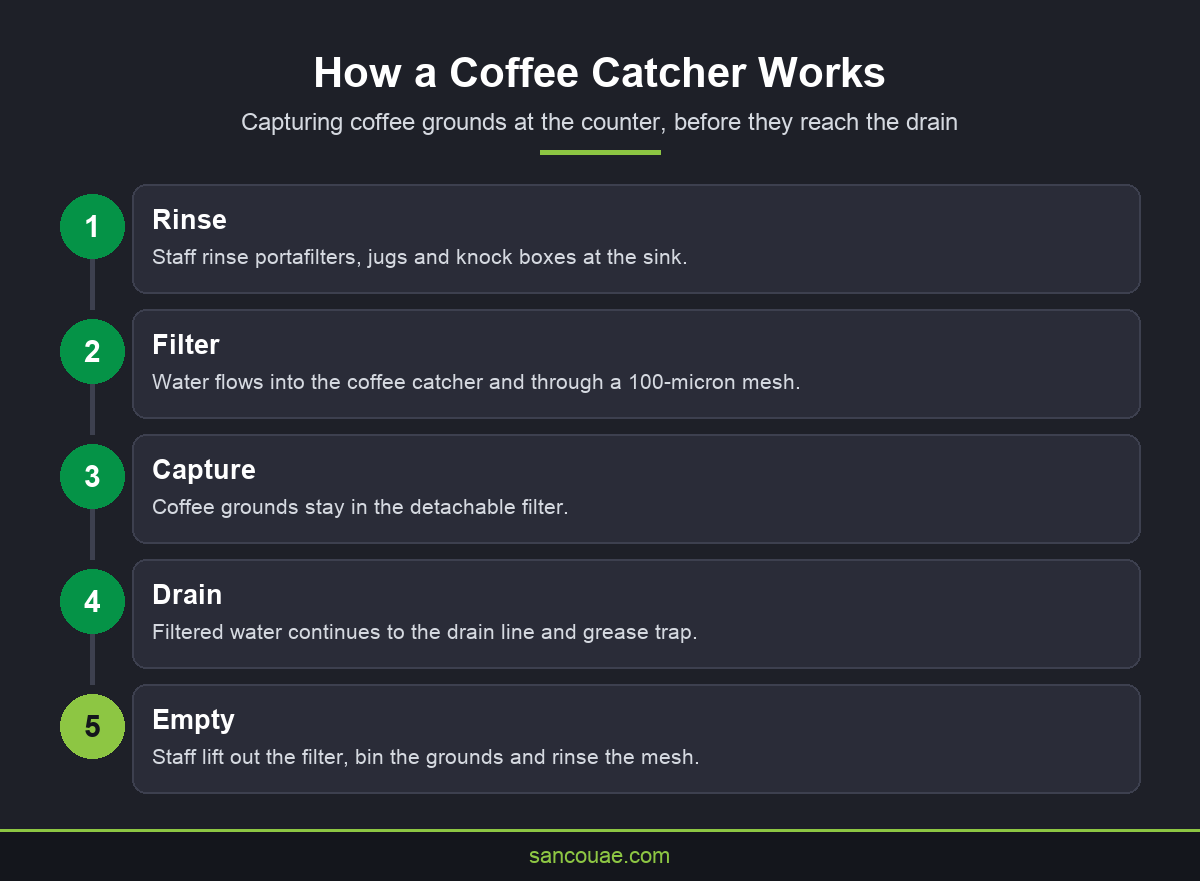
The key part is the mesh. Sanco’s coffee catcher uses a detachable filter membrane with a 100-micron mesh. That is fine enough to capture small particles such as coffee grounds, yet the filter lifts out for emptying and cleaning.
Because the unit works by simple filtration, it needs no power and has no moving parts. Its performance depends on one habit: emptying the filter before it fills. A full filter slows the flow, so staff should check it as part of their routine.
A coffee catcher does not replace a grease trap. It protects the drain and the grease trap from one specific kind of solid waste. The grease trap still separates fats, oils and grease, and it still needs regular grease trap cleaning under the municipality rules.
Inside the Sanco Coffee Catcher
Sanco’s coffee catcher is designed to improve drainage in commercial settings. It is particularly suited to coffee preparation areas, and it is also used in the precious metals industry to capture fine metal debris.
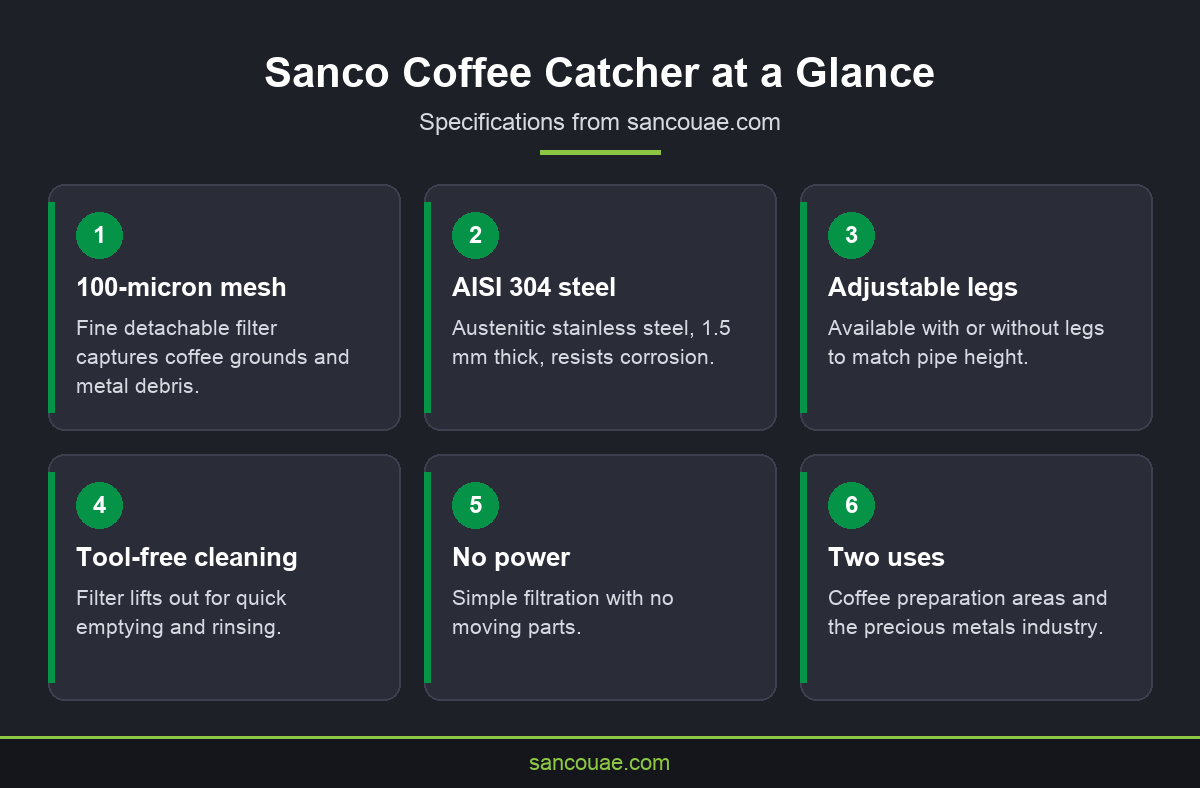
The body is made from austenitic AISI 304 stainless steel, 1.5 mm thick. This grade is widely used in food and wet environments because it resists corrosion and wear. It suits a counter that is rinsed and cleaned many times a day.
The unit is available with or without adjustable legs. The legs let installers match the height of the existing pipework, which keeps the installation neat and avoids awkward pipe changes under the counter.
The 100-micron filter is detachable, so it lifts out without tools for cleaning. That simple design keeps maintenance quick, which matters most at the busiest coffee counters where every minute counts.
Placement matters as much as the product. Fit the unit as close as possible to the point where grounds enter the water, and make sure staff can reach it without moving equipment. A filter that is hard to reach is a filter that is not emptied. Leave enough clearance above it to lift the mesh out comfortably.
Where a Coffee Catcher Makes Sense
Any site that rinses coffee equipment into a sink can benefit. The obvious candidates are cafes and coffee shops, but many other sites run busy coffee stations every day.
Offices with large pantries and staff coffee bars face the same issue on a smaller scale. Hotels serve coffee at breakfast buffets, lobby lounges and banqueting stations. Restaurants run espresso machines next to busy kitchens. Bakeries, malls and food courts often have several coffee counters sharing one drain line. In each case, the unit protects the line closest to the source.
For sites with several counters, start with the busiest one and measure the result. Note how often drains were cleared before and after installation, and how much the filter collects each day. That simple record shows whether the other counters need the same protection.
Sites with a history of slow drains at the coffee counter are the best place to start. If your team already calls for drain clearing every few months, a filter at the source is a low cost way to tackle the cause rather than the symptom.
Industrial users have a different reason. The Sanco unit is also designed to capture metal debris, which makes it useful in workshops that handle precious metals and want to keep fine particles out of the drains.
Looking After Your Coffee Catcher
Maintenance is simple, but it must be consistent. Agree who empties the filter, when and how. Many teams link it to an existing routine, such as closing the coffee station or changing shifts.
To clean the filter, lift it out, empty the grounds into a bin or compost container and rinse the mesh. Never knock the grounds back into the sink. Check the mesh for damage when you clean it, and replace it if it is torn. A damaged mesh lets grounds straight through, so a quick look each time is worth the few seconds it takes.
If drains are already slow before you fit a coffee catcher, clear them first. Our high pressure drain line jetting service removes existing build-up, and a CCTV drain survey can confirm the line is clear. The coffee catcher then keeps it that way.
Train every new barista on the routine during their first shift. Show them where the filter is, how to lift it out and where the grounds go. Add the task to opening and closing checklists so it is never forgotten during busy periods or staff changes.
This kind of filter works best as part of wider kitchen habits. Scrape plates before washing, collect fryer oil separately and keep your grease trap on a regular cleaning plan. Together, these steps keep solids and grease where they belong.
Conclusion
Coffee grounds are small, but they cause real drain problems in busy cafes, hotels and restaurants. A coffee catcher captures them at the counter with a fine stainless steel mesh, so they never reach your pipes or grease trap. It needs no power and very little upkeep, as long as the filter is emptied regularly. To add a coffee catcher to your coffee station or ask about installation, request a quote from the Sanco team.
Frequently Asked Questions
What is a coffee catcher?
A coffee catcher is a compact filter unit fitted to the drain line from a coffee machine or sink. Its fine mesh captures coffee grounds before they enter the drain, while water passes through to the pipe.
Why should coffee grounds not go down the drain?
Coffee grounds do not dissolve. They settle in pipes, bends and traps, where they build up and narrow the line. In kitchens with grease, they can bind with fats and make blockages harder to clear.
Does a coffee catcher replace a grease trap?
No. A coffee catcher captures coffee grounds, while a grease trap separates fats, oils and grease. Food establishments in Dubai still need an approved grease trap that is cleaned at least twice a month.
What mesh size does the Sanco coffee catcher use?
It uses a detachable filter membrane with a 100-micron mesh. This captures fine particles such as coffee grounds and metal debris while letting water flow through to the drain line. The filter lifts out without tools for emptying.
What material is the coffee catcher made from?
The Sanco coffee catcher is made from austenitic AISI 304 stainless steel, 1.5 mm thick. This grade resists corrosion and wear, which suits busy wet areas such as coffee counters that are rinsed and cleaned many times a day.
How often should a coffee catcher be emptied?
It depends on how much coffee you serve. Busy counters may need emptying several times a day. Link it to a fixed routine, such as shift changes, so the filter never fills completely.
Can a coffee catcher be fitted to an existing coffee station?
Usually yes. The unit is available with or without adjustable legs, so installers can match the height of existing pipework without major changes under the counter. Our team can check your setup before you order.
What other products does Sanco supply for drains?
Sanco supplies grease traps, grease and oil interceptors, automatic dosing pumps, bio enzyme liquids and coffee catchers for commercial kitchens and drainage systems. See the full range and specifications on our products page.
How do I ask a question about a coffee catcher?
Call, email or message the Sanco team through our contact page. Tell us about your coffee station and drains, and we will recommend the right setup and installation for your site and budget.