An oil interceptor stops oil, fuel and sludge from reaching the main sewer. Vehicle workshops, car washes and parking garages all wash oily residues into their floor drains every day. Without an oil interceptor, those hydrocarbons travel straight into the drainage network. This guide explains how an oil interceptor works, which sites need one, how stainless steel units are built, and what to plan for installation and servicing, so your site stays clean and compliant.
Key Takeaways
- An oil interceptor slows wastewater so oil floats, solids settle and cleaner water leaves the unit.
- Workshops, service stations, car wash bays, parking garages and loading bays are typical users.
- Stainless steel units with inspection covers and sediment chambers are easier to service and last longer.
What an Oil Interceptor Does
An oil interceptor is a separation unit installed on a drain line. Wastewater enters, slows down and spreads across internal chambers. Oil and fuel are lighter than water, so they rise to the surface. Grit and sludge are heavier, so they settle at the bottom. Cleaner water leaves through the outlet.
The principle is the same as the oil and water separator used in industry. It relies on gravity, not chemicals or power. Internal baffles guide the flow, give the oil time to separate and stop floating oil from reaching the outlet.
People often confuse an oil interceptor with a kitchen grease trap. Both separate lighter liquids from water, and the term grease trap interceptor is sometimes used for both. The difference is the waste. Kitchen traps handle food fats, oils and grease. Oil interceptors handle hydrocarbons such as engine oil, lubricants and fuel, plus the grit that comes with them.
That difference matters for design and maintenance. Hydrocarbons and road grit behave differently from food grease, so vehicle sites need units built for their waste rather than a kitchen trap installed in the wrong place.
Keeping hydrocarbons out of the sewer protects more than your own pipes. Oil and fuel can coat sewer lines, interfere with treatment processes and create odours and safety risks in confined drainage spaces. Capturing them at the source is simpler and cheaper than dealing with the damage further down the network, and it shows customers and neighbours that the site is well run.
Which Sites Need an Oil Interceptor
Any site where oil, fuel or lubricants can reach a floor drain should consider an oil interceptor. The most common examples are places where vehicles are washed, serviced or parked.
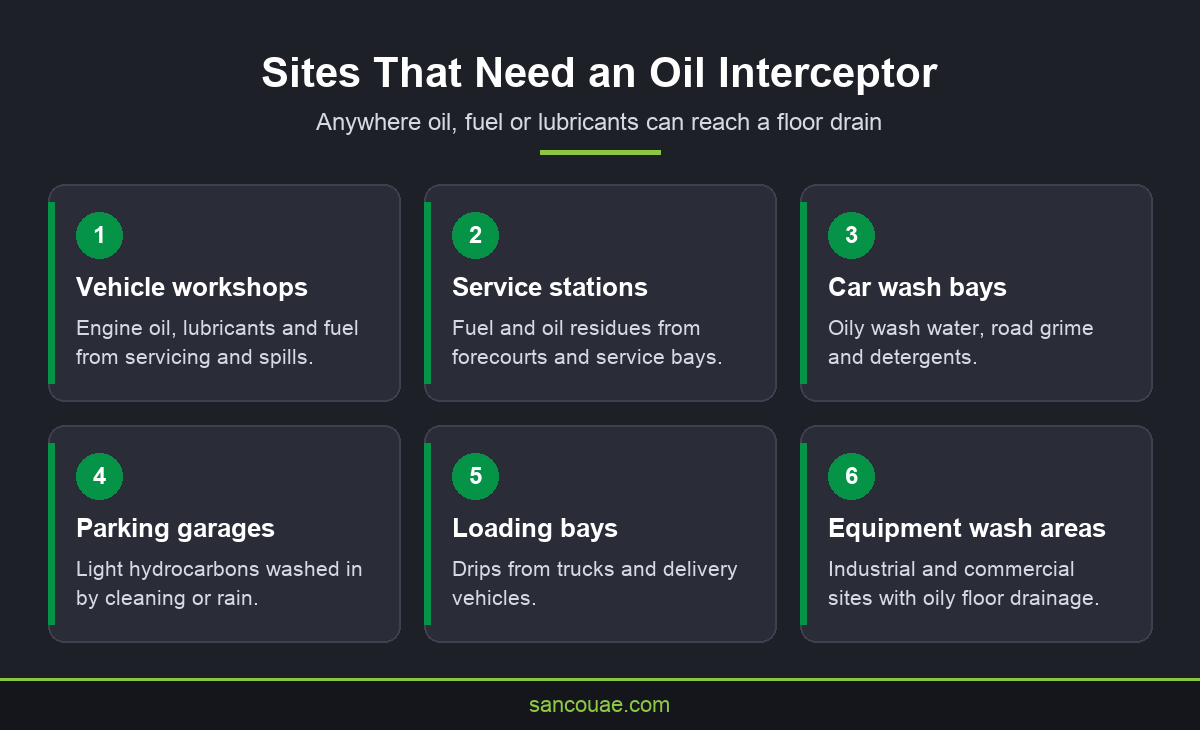
Vehicle workshops and service stations handle engine oil, lubricants and fuel every day. Spills, drips and floor washing all carry residues to the drains. Car wash bays add detergents, road grime and the oil that washes off vehicles.
Parking garages and loading bays collect light hydrocarbons from parked vehicles, which rain or cleaning water washes into the drains. Industrial and commercial sites with equipment wash areas or oily floor drainage face the same problem on a different scale.
Sanco’s product page also lists restaurants and residential communities among suitable applications, where oily drainage from service areas or shared parking needs to be controlled. In mixed-use buildings, the parking levels and the kitchens may need separate units, each designed for its own type of waste.
Requirements for these sites can vary by location and activity. Check what applies to your premises with the relevant authority, such as Dubai Municipality for sites in Dubai, before you design or upgrade your drainage.
Inside Sanco’s SG4 to SG8 Oil Interceptors
Sanco’s stainless steel oil interceptor range covers five models, SG4 to SG8. Each is a compact unit installed on the drainage line to capture oils, fuels and sludge before they enter the main sewer.
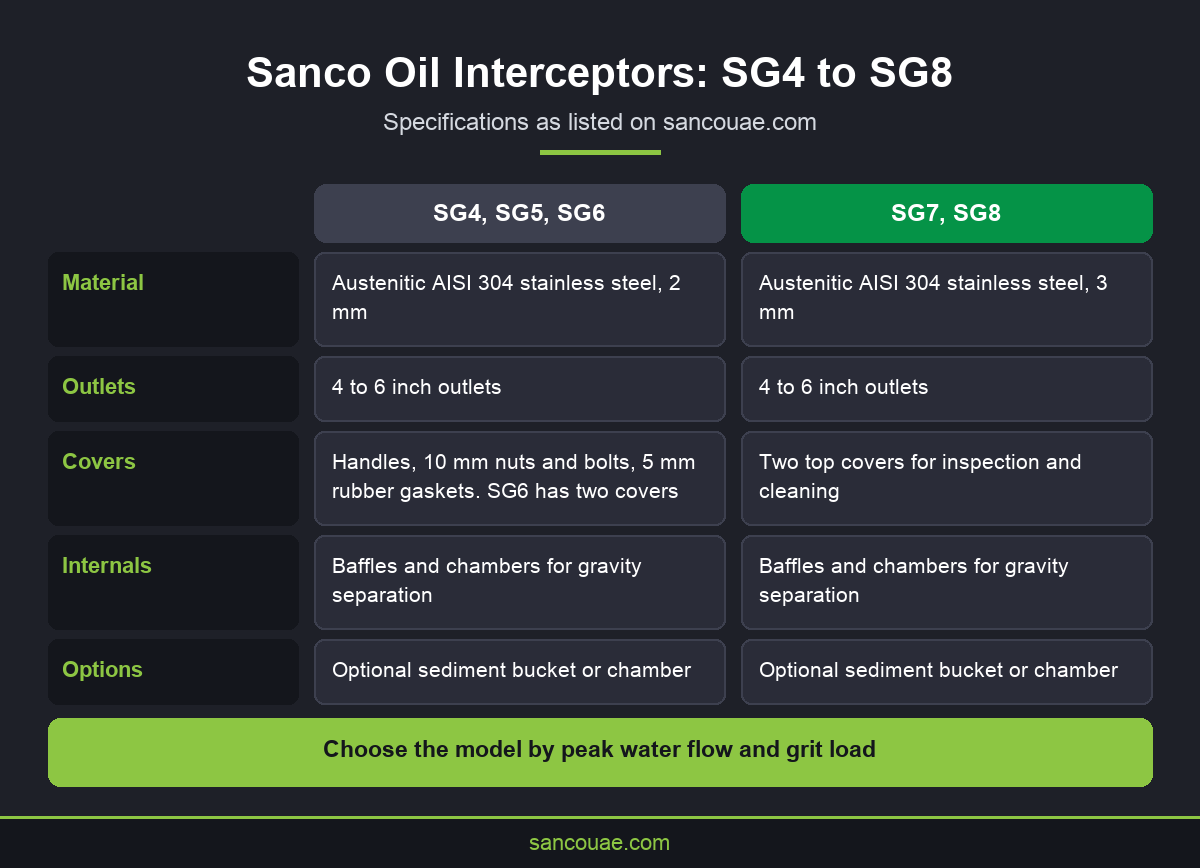
SG4, SG5 and SG6 are made from austenitic AISI 304 stainless steel, 2 mm thick. SG7 and SG8 use the same grade at 3 mm for extra strength in larger units. Inside, baffles and chambers are designed for efficient gravity separation of oil, fuel and suspended solids, and the smooth internal surfaces reduce build-up and speed up cleaning.
Practical details make servicing easier. All models have 4 to 6 inch outlets for connection to existing pipework, handles on the top covers, covers fixed with 10 mm nuts and bolts, and 5 mm rubber gaskets to prevent leaks and odours. SG6, SG7 and SG8 have two top covers for easier inspection and cleaning. An optional sediment bucket or chamber traps grit before it reaches the pipes.
If you are comparing a stainless steel grease interceptor supplier with other options, ask for the same details: steel grade and thickness, outlet sizes, cover design and sediment handling. These points decide how long the unit lasts and how easy it is to service.
Planning an Oil Interceptor Installation
Start with the drainage layout. Identify every floor drain, wash bay and channel that could carry oil, and where they join. The oil interceptor should sit where it can capture all of that flow before it meets the main sewer line.
Size the unit to the flow. A busy multi-bay car wash produces far more water than a small workshop. Choosing between SG4 and the larger SG7 or SG8 models depends on how much water passes through at peak times and how much grit it carries.
Plan access from day one. Covers must be reachable for inspection, and the unit must be accessible for emptying. In parking garages and loading bays, make sure servicing does not block traffic or deliveries. Where possible, schedule visits for quieter hours, such as early mornings or the end of the day, so the site keeps running while the unit is emptied.
If existing drains are already contaminated or partly blocked, clean them before installation. Our high pressure drain line jetting service clears indoor and outdoor drains, and a CCTV drain survey shows the condition of the pipes so you know where the interceptor should go.
Record the installation clearly. Mark the model, location and cover positions on your site drawings, and keep the supplier details and installation date on file. Future facility teams, contractors and inspectors can then find and service the unit without guesswork.
Maintaining and Servicing an Oil Interceptor
An oil interceptor only works while it has room to hold oil and sludge. As the layers build up, separation becomes less effective and oil can escape to the outlet. Regular inspection and emptying keep the unit working as designed.
Set a routine based on how the site is used. Check the oil layer and sediment depth at fixed intervals, empty the sediment bucket where fitted, and keep a simple log of each inspection and service visit.
Watch for warning signs between visits. An oily sheen at the outlet, strong fuel odours near the drains or water backing up in wash bays all suggest the unit is full or blocked. Call for service early rather than waiting for the next scheduled visit.
Removed oil and sludge should be handled by a licensed contractor, never washed back into the drains. For larger volumes or emergencies, our tanker service supports collection and removal across Dubai.
With Sanco, you get the equipment and the service from one team. Our technical team can supply, install and periodically service the stainless steel oil interceptor, which gives you a single point of contact for both product and maintenance. For connected drainage, we also offer sewage tank and sump pit cleaning.
Conclusion
An oil interceptor keeps oil, fuel and sludge out of the sewer and protects your drains from build-up. Workshops, car washes, parking garages and loading bays all benefit. Choose a stainless steel unit sized to your peak flow, plan access for inspection and emptying, and service it on a fixed routine. To discuss the right SG model for your site, request a quote from Sanco and our team will advise on supply, installation and servicing.
Frequently Asked Questions
What is an oil interceptor?
An oil interceptor is a separation unit fitted to a drain line. It slows wastewater so oil and fuel float to the top and grit settles at the bottom, letting cleaner water continue to the sewer.
Is an oil interceptor the same as a grease trap?
They work on the same principle but handle different waste. Grease traps deal with food fats, oils and grease from kitchens. Oil interceptors deal with hydrocarbons such as engine oil, lubricants and fuel.
Which businesses need an oil interceptor?
Vehicle workshops, service stations, car wash bays, parking garages, loading bays and industrial sites with oily wash areas are common users. Check local requirements for your activity with the relevant authority before you design or upgrade drainage.
What are Sanco oil interceptors made from?
They are made from austenitic AISI 304 stainless steel. SG4, SG5 and SG6 use 2 mm steel, while SG7 and SG8 use 3 mm steel for extra strength and longevity in the larger units.
How is an oil interceptor sized?
Size depends on peak water flow and the amount of grit and oil the site produces. A busy multi-bay car wash needs a larger unit than a small workshop with one service bay.
How often should an oil interceptor be emptied?
It depends on site activity. Inspect the oil layer and sediment depth at fixed intervals and empty the unit before separation is affected. Keep a log so you can adjust the routine over time.
What happens to the oil removed from an interceptor?
Removed oil and sludge should be collected by a licensed contractor and taken for proper disposal. It must never be washed back into the drains or the sewer network. Keep a record of each collection with your service log.
Does Sanco also supply kitchen grease traps?
Yes. Sanco supplies stainless steel under-sink grease traps in three sizes and outdoor PVC units for larger kitchen flows. The SG1 to SG3 models are Dubai Municipality approved. See the range on our grease trap products page.
Can Sanco install the interceptor as well as supply it?
Yes. Our technical team supplies, installs and periodically services interceptors and grease traps, giving you one point of contact for product and maintenance. Learn more on our grease trap supply and installation page.