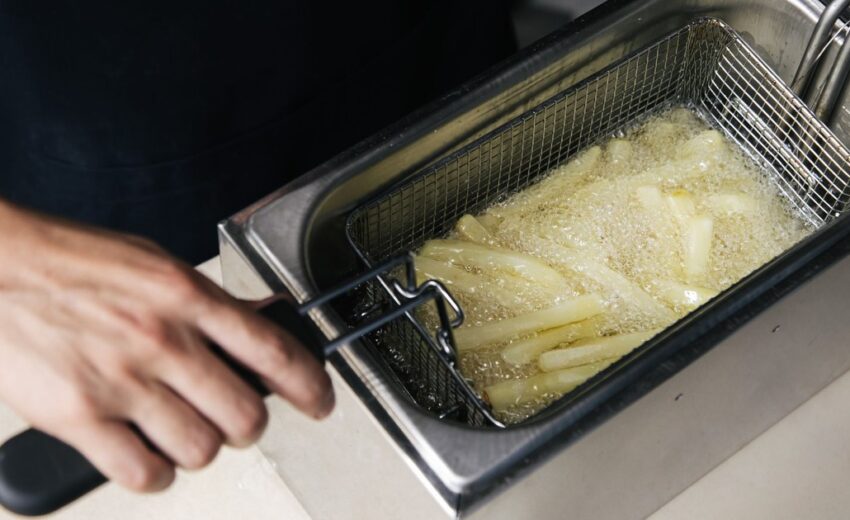
Used cooking oil collection is a simple service that solves an expensive problem. Every fryer in a restaurant eventually produces oil that is too old to use, and it has to go somewhere. Poured down a sink, it cools, sets and blocks drains. Collected properly, it can be recycled. This guide explains why oil must stay out of the drains, how used cooking oil collection differs from grease trap cleaning, how collection works and how to choose a schedule.
Key Takeaways
- Fryer oil should never be poured into sinks or drains, where it sets and causes blockages.
- Used cooking oil collection removes bulk oil, while grease trap cleaning deals with the FOG that still reaches the drains.
- A used cooking oil collection service for restaurants can run weekly, monthly or on call, depending on fryer volume.
Why Used Cooking Oil Should Never Go Down the Drain
Cooking oil is a daily essential in most commercial kitchens. After repeated use, it breaks down. It turns rancid, smells bad and gives food an unpleasant taste, so it must be replaced. The question is what happens to the old oil.
Pouring it down the sink is the worst option. Hot oil flows easily, but it cools quickly in the pipes. As it cools, it thickens and sticks to pipe walls, catching food particles and other waste. Over time, this build-up narrows the pipe until water can no longer pass. In large sewer systems, these masses are known as fatbergs.
Bulk oil also overloads the grease trap. A grease trap is designed to separate the fats, oils and grease that come off plates, pans and utensils. It is not designed to absorb the contents of a fryer. Pouring fryer oil into a sink fills the trap far faster and pushes grease into the pipes beyond it.
Dubai Municipality treats food oil and grease as a waste stream to manage carefully. Its grease trap guideline describes a city system for separating, transporting and recycling food oil and grease waste. Keeping bulk oil out of the drains supports that system and protects your own kitchen from blockages.
Oil in the drains also affects hygiene. Old oil that sits in pipes and traps begins to smell, and the odour can reach the kitchen through floor drains and sinks. Regular used cooking oil collection removes that source at the start, so the problem never begins.
Used Cooking Oil vs Grease Trap Waste
These two waste streams come from the same kitchen, often from the same cooking line, but they are handled very differently. Understanding the difference helps you plan both services properly.
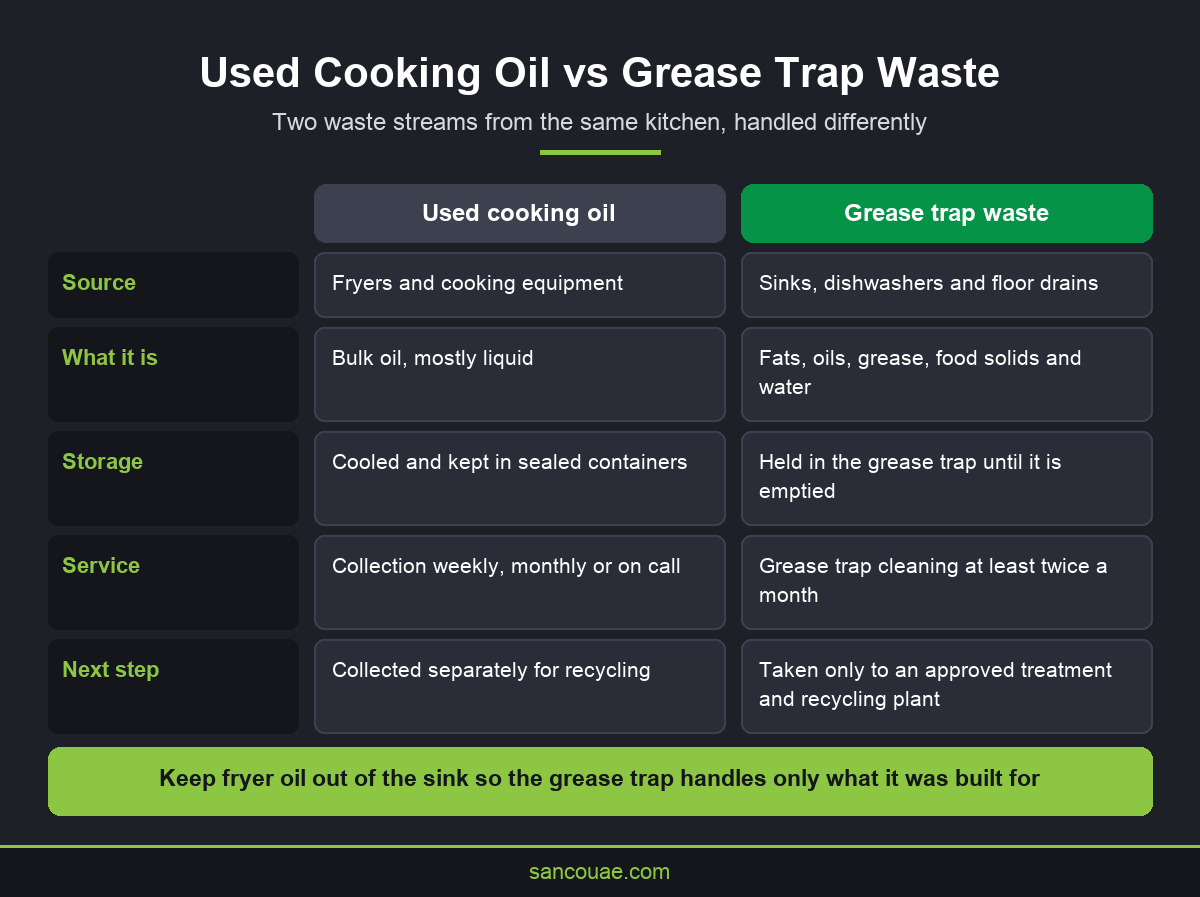
Used cooking oil is the bulk oil from fryers and cooking equipment. It is relatively clean, stays liquid at kitchen temperature and can be stored in sealed containers until collection. Because it is collected separately, it is easier to recycle.
Grease trap waste is a mix of fats, oils, grease, food solids and water that has already passed through the sinks. It collects in the grease trap and must be removed by vacuum during grease trap cleaning. Under the Dubai Municipality guideline, grease traps must be cleaned regularly and at least twice a month.
The two services support each other. Used cooking oil collection keeps bulk oil out of the drains, so the grease trap handles only what it was designed for. The result is fewer overflows, cleaner drains and a more predictable cleaning schedule for the whole kitchen.
How Used Cooking Oil Collection Works
A good used cooking oil collection service is simple for the kitchen team. The flow below shows the typical steps from fryer to recycling.
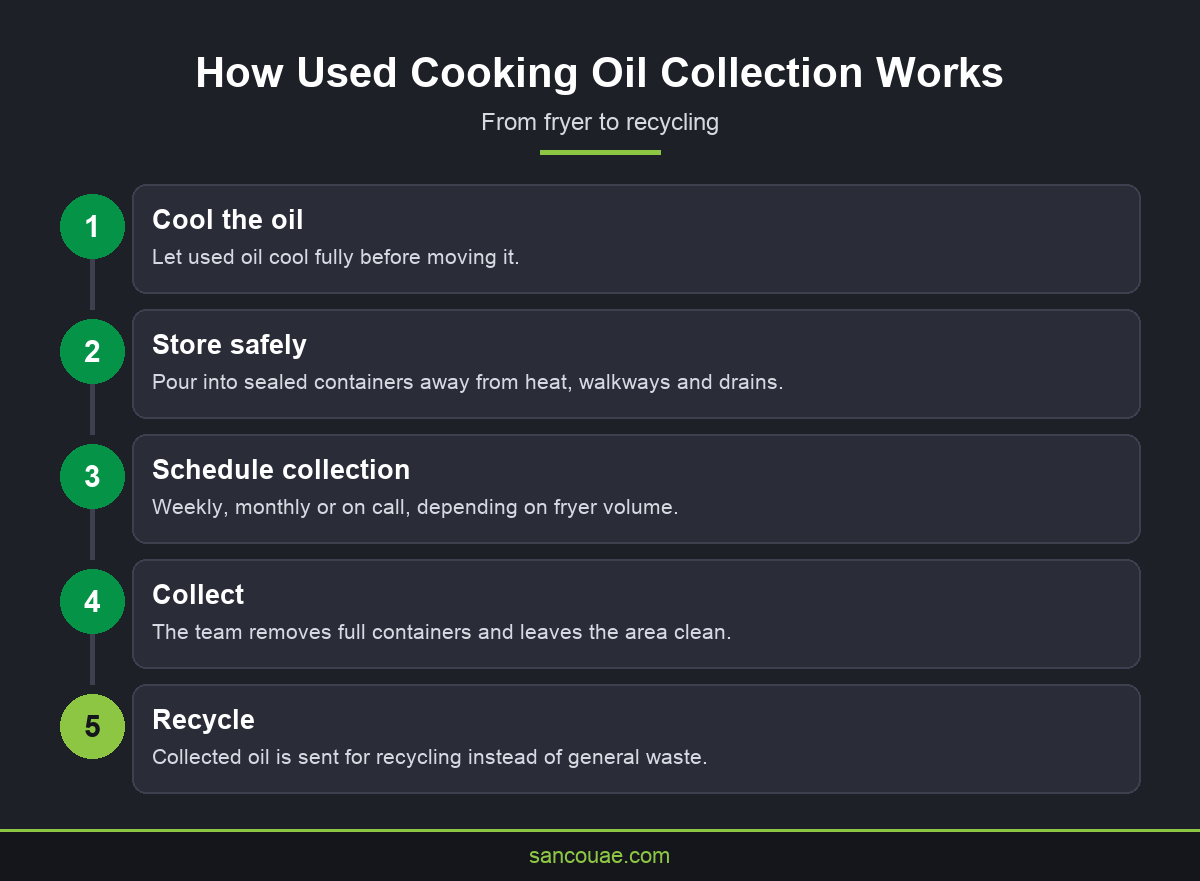
It starts with storage. Kitchen staff let used oil cool, then pour it into sealed containers kept in a safe, agreed location. At Sanco, we schedule used cooking oil collection on a weekly, monthly or on-call basis, depending on how much oil your kitchen produces.
On collection day, the team removes the full containers and leaves the site clean. We collect all common types of used cooking oil, including vegetable, coconut, peanut, olive, canola and sunflower oil. Our service page explains that the collected oil is recycled rather than sent to general waste.
Getting started is straightforward. Tell us how many fryers you run, how often you change the oil and where containers can be stored safely. We will suggest a used cooking oil collection schedule and adjust it as your volumes change, for example during busy seasons or after a menu update.
Recycling gives the oil a second life. Around the world, used cooking oil is commonly reprocessed into products such as biodiesel. Separate collection is what makes that possible, because oil mixed with drain waste is much harder to recover.
Storing Used Oil Safely Between Collections
Good storage protects your staff, your premises and the quality of the oil. A few simple habits make a big difference.
Always let oil cool before moving it, even when the kitchen is busy and space is short. Hot oil causes serious burns, and pouring it into plastic containers while hot can damage them. Use strong, sealed containers with secure lids, and never use containers that held chemicals or cleaning products.
Keep containers away from heat sources, walkways and drains. A spill near a floor drain can send oil straight into the system you are trying to protect. Keep absorbent material nearby so staff can deal with small spills quickly.
Label the storage area clearly in English and in the languages your team uses, and train staff on the routine. Everyone who works the fryer should know where the containers are, when collection happens and who to tell when containers are nearly full.
Never mix used oil with general waste. Sanco’s service page warns that disposing of oil with other waste causes spillages and pollution problems. Bins can leak, bags can split and oil can end up on floors, in loading bays or in drains outside the kitchen. Keeping oil in its own sealed containers until collection avoids all of these risks.
Choosing a Used Cooking Oil Collection Schedule and Provider
The right schedule depends on your menu and volume. A busy fast food outlet with several fryers may need weekly used cooking oil collection. A restaurant with one fryer may need a monthly visit. Sites with irregular volumes can use on-call collection and book a visit when containers are nearly full.
When comparing providers, ask how often they can collect, what containers they provide or accept, how quickly they respond to on-call requests and what happens to the oil after collection. A used cooking oil collection service for restaurants should also leave the area clean and keep a simple record of each visit.
It helps to choose a provider that understands the whole kitchen drainage system. Sanco also supplies grease traps, cleans them on scheduled plans and offers high pressure drain line jetting when drains are already blocked. One team can then look after oil, traps and drains together.
Grease also builds up above the cooking line. If your fryers run all day, combine oil collection with regular kitchen exhaust system cleaning so hoods and ducts stay clean too.
Groups with several outlets can simplify things further. One provider and one schedule across all kitchens make it easier to compare volumes, spot outlets that change oil too often and keep consistent records for every site.
Conclusion
Used cooking oil collection keeps fryer oil out of your sinks, protects your grease trap and gives the oil a second life through recycling. Store cooled oil safely in sealed containers, choose a weekly, monthly or on-call schedule that matches your volume, and pair it with regular grease trap cleaning. To set up collection for your kitchen, request a quote from Sanco and our team will recommend the right schedule for your fryers and volume.
Frequently Asked Questions
What is used cooking oil collection?
It is a service that collects old fryer and cooking oil from kitchens in sealed containers, so it does not go down the drain. The collected oil can then be recycled instead of being sent to general waste.
Why can’t I pour used cooking oil down the sink?
Oil cools and thickens in the pipes, sticks to the walls and traps food waste. Over time it narrows and blocks the drain, and it overloads your grease trap far faster than normal kitchen use.
How often should used cooking oil be collected?
It depends on fryer volume. Busy fast food outlets may need weekly collection, while smaller kitchens may need monthly visits. Sites with irregular volumes can book on-call collection when containers are nearly full.
Is used cooking oil collection the same as grease trap cleaning?
No. Oil collection removes bulk oil from fryers before it reaches the drains. Grease trap cleaning removes the fats, oils, grease and solids that collect in the trap from sinks and dishwashers. Most kitchens need both services.
What types of oil does Sanco collect?
Sanco collects all common types of used cooking oil, including vegetable, coconut, peanut, olive, canola and sunflower oil, from kitchens across Dubai on a weekly, monthly or on-call basis, depending on how much oil you produce.
What happens to used cooking oil after collection?
Sanco’s service page explains that collected oil is recycled rather than sent to general waste. Around the world, used cooking oil is commonly reprocessed into products such as biodiesel, which keeps it out of drains and landfill.
How should I store used cooking oil before collection?
Let it cool fully, then pour it into strong sealed containers. Keep them away from heat, walkways and floor drains, and keep absorbent material nearby in case of small spills. Never pour hot oil into plastic containers.
Does Sanco offer other services for restaurants?
Yes. We offer grease trap supply, installation and cleaning, drain jetting, kitchen exhaust cleaning, pest control and tank cleaning for restaurants, cafes and hotels. See the full list and details on our services page.
How long has Sanco worked with Dubai restaurants?
Sanco Environmental Services was established in 2012 and works with restaurants, cafes, hotels and other food businesses across Dubai. Learn more about our company, mission and team values on our about us page.