Choosing a grease trap cleaning company in Dubai is not only about price. The company you hire handles waste that your business produced, transports it across the city and decides where it ends up. A good grease trap cleaning company keeps your drains clear and your records clean. A poor one can leave you with blockages and questions from inspectors. This checklist is built directly on Dubai Municipality’s published requirements for cleaning and transport companies.
Key Takeaways
- Dubai Municipality sets clear requirements for grease trap cleaning companies, from licences and tankers to GPS and disposal.
- Ask every contractor for documents, not promises: licence activity, vehicle approval and proof of disposal at an approved plant.
- Compare grease trap cleaning services on safety, reporting and response time as well as price.
Why Your Choice of Contractor Matters
When you search for grease trap cleaning near me, you will find many companies offering similar services. On the surface they look the same. Behind the scenes, the rules they must follow are detailed, and not every company follows them.
The Dubai Municipality grease trap guideline sets duties for both sides. Food establishments must install approved traps and have them cleaned regularly and at least twice a month. Cleaning companies must be licensed, use approved vehicles and discharge the waste only at an approved treatment and recycling plant.
Your business carries part of the risk. The guideline lists failing to clean the trap regularly, and failing to provide required documents to inspectors, among the violations for food establishments. If your contractor misses visits or cannot prove where the waste went, you are the one answering questions.
The contractor carries its own risk too. Under the guideline, a company that breaches its conditions faces a fine of AED 5,000 to AED 500,000, doubled for a repeat within a year. A grease trap cleaning company that takes these rules seriously is a safer partner for your kitchen.
Price still matters, but it should be the last filter, not the first. A very low quote can mean missed visits, shortcuts on safety or waste that never reaches an approved plant. Compare prices only between companies that have already passed the checks below. The cheapest grease trap cleaning company is rarely the one with the lowest total cost once blockages and fines are counted.
Licences and Registrations to Check
Start with the paperwork. The guideline requires companies that clean grease traps and transport the waste to hold a valid Dubai licence for that work. The licensed activity it names is code 900017, grease traps cleaning and waste removal.
Ask whether the company is registered on Dubai Municipality’s FoodWatch platform. The guideline requires every grease trap waste company to register there and to follow its requirements for cleaning and transporting the waste.
Ask about vehicle approval. Every vehicle that transports grease trap waste needs prior approval from the Sewage Treatment Plants and Network Department, and vehicles are inspected before a transport permit is issued.
Finally, ask about safety documents. Companies must submit a Safe Work Method Statement for cleaning, collecting and transporting grease trap waste. A recommended grease trap cleaning company for restaurants should be able to share these details without hesitation.
If you are unsure about a document, check it. Dubai Municipality’s Sewage Treatment Plants and Network Department oversees these approvals, and the Dubai Municipality website is the place to start. A genuine grease trap cleaning company will understand why you are asking and will not be offended.
Vehicles, Equipment and Safety on Site
You can learn a lot from the tanker that arrives at your door. The guideline is specific about what an approved vehicle looks like and what it carries.
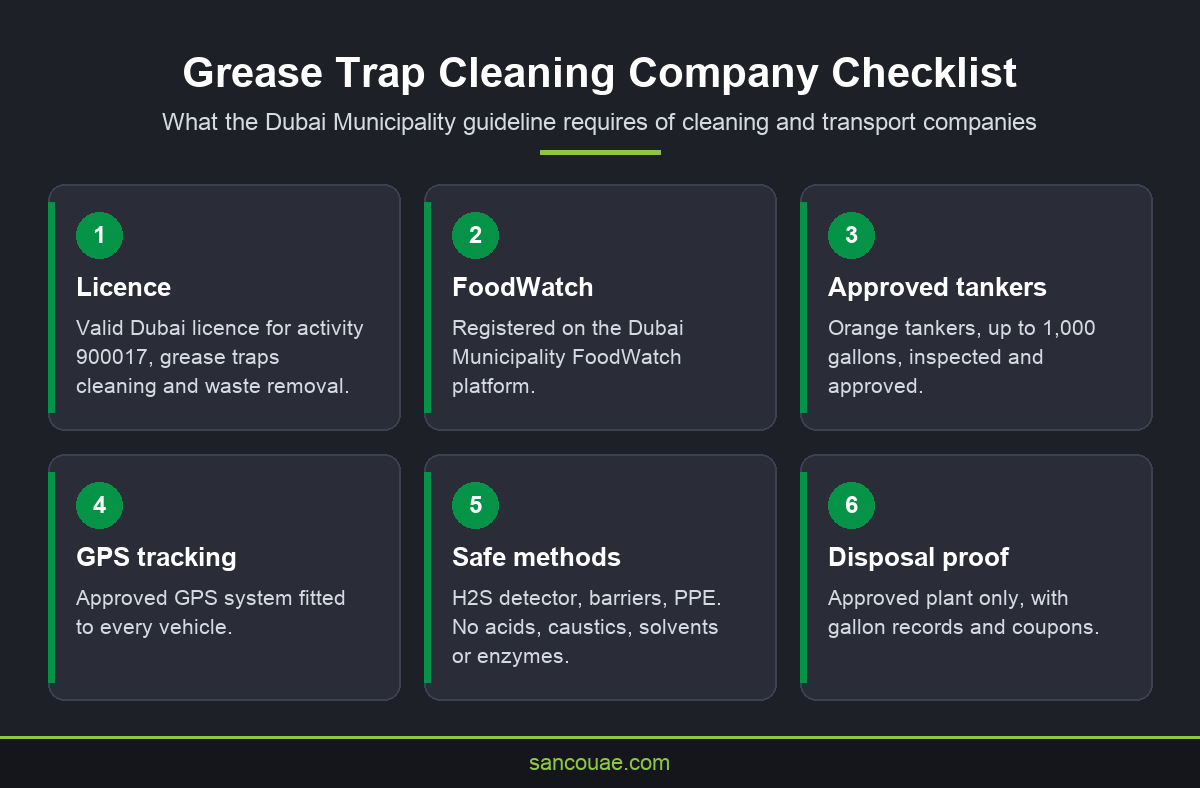
Grease trap waste tankers are painted orange, with a maximum capacity of 1,000 gallons unless an exception has been approved. They show the company name, address and phone number, a tank identification number and hazard signage. They must have an approved GPS tracking system and carry safety equipment for leaks and spills.
Watch how the crew works. The guideline requires a hydrogen sulphide gas detector at the trap, barriers around the work area and a word with the person in charge before work starts. Staff must wear protective equipment and be trained in confined space safety and spill response.
Check the method too. The guideline strictly forbids acids, caustics, solvents, enzymes or emulsifying agents when cleaning grease traps. A professional grease trap cleaning company removes the waste by vacuum and washes the trap with water.
Some warning signs are easy to spot. Be cautious of unmarked trucks, crews who skip the gas check or barriers, and any request to pump waste into another vehicle on site. The guideline forbids transferring waste from one vehicle tank to another. If you see these signs, ask questions before the grease trap cleaning company starts work again.
Disposal Records and Service Reports
Where your waste goes is the most important question, and the hardest to see. The guideline requires all grease trap waste to be discharged only at a Dubai Municipality approved treatment and recycling plant, and immediately after collection.
There is a paper trail for this. Plant staff issue invoices that record the source of the waste and the amount in US gallons, and vehicles carry a coupon book before entering the plant. Companies must be able to provide evidence of the amount collected and discharged.
Ask your contractor what you will receive after each visit. At Sanco, our grease trap cleaning company team records the volume of grease removed and provides FOG reports, and our service page notes that municipality reports are provided after completion of the service.
Keep every report on file. If an inspector visits, you can show the dates, volumes and contractor details for each clean. That history is your best evidence that the trap is maintained.
Before you sign a contract, ask each grease trap cleaning company for a sample report. Check that it shows the date, the trap cleaned, the volume removed and the technician’s notes. If the sample is vague, the real reports will be too.
Comparing Quotes and Service Quality
Once you have a shortlist of compliant companies, compare them carefully on service, not just on price. The steps below make quotes easier to compare fairly.
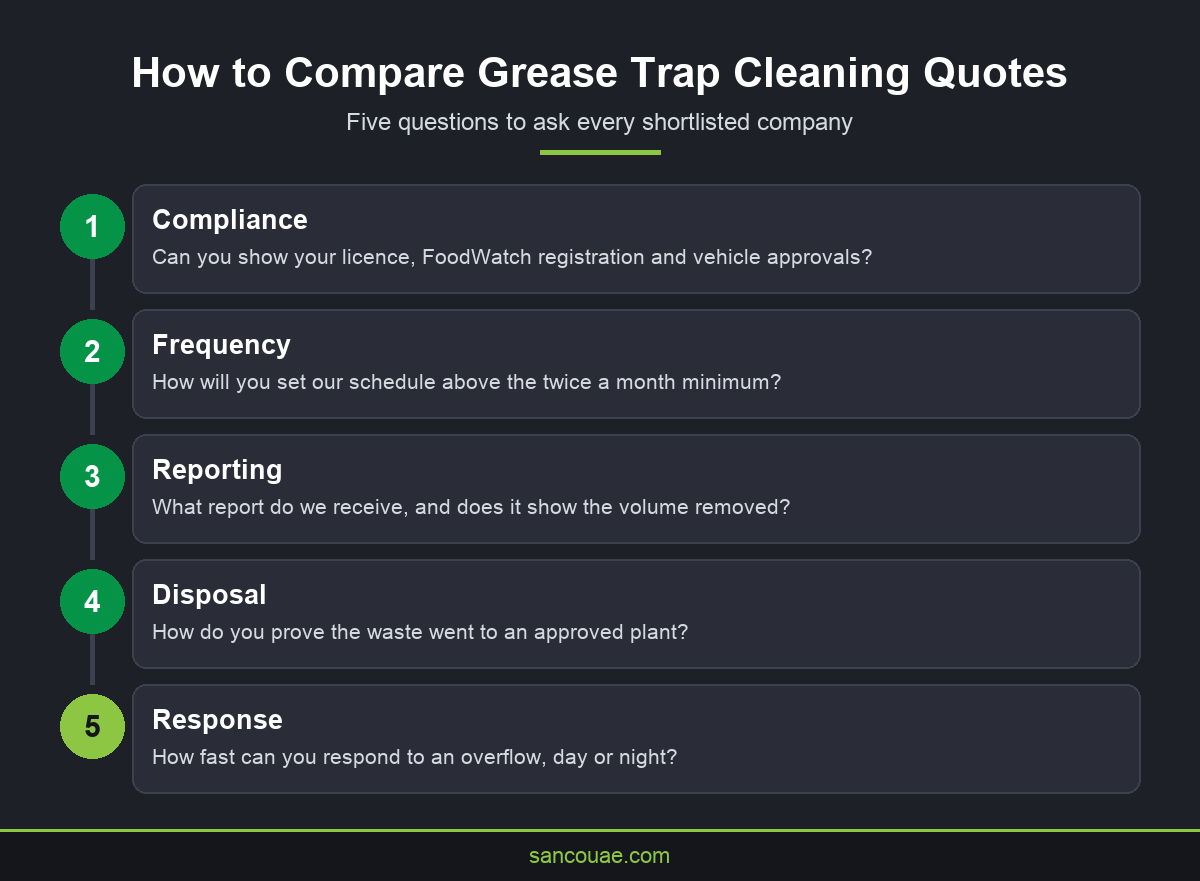
Ask how each company sets the cleaning frequency. The municipality minimum is at least twice a month, but a busy kitchen may need more. A good contractor looks at your trap and your volume before proposing a schedule.
Ask about emergencies. Overflows rarely happen at convenient times, and they can come during the busiest service of the day. Sanco offers 24/7/365 callouts and runs its own tanker service, which helps when a blockage needs a fast response.
Ask what else the company can do. A contractor that also handles grease trap supply and installation and high pressure drain line jetting can solve problems that cleaning alone cannot. If your trap is undersized or damaged, they can advise on an approved grease trap replacement.
Finally, look at the contract length and review terms. Sanco offers grease trap cleaning services on 3-month, 6-month or annual plans, so you can start with a shorter term and extend once you are satisfied. Whatever you choose, review the schedule and the reports at least once a year, and adjust the plan if your kitchen has changed.
Conclusion
The right grease trap cleaning company protects your drains, your records and your reputation. Check licences, FoodWatch registration and vehicle approvals, watch how the crew works on site, and insist on proof of disposal at an approved plant. Then compare quotes on frequency, reporting and response time, not price alone. To see how Sanco handles these points for your kitchen, request a free quote and ask us for the documents and a sample report before you sign.
Frequently Asked Questions
What licence should a grease trap cleaning company have in Dubai?
The Dubai Municipality guideline requires a valid Dubai licence for handling and transporting grease trap waste. The activity it names is code 900017, grease traps cleaning and waste removal, in the sewage and irrigation services group.
What is FoodWatch?
FoodWatch is a Dubai Municipality smart platform. The grease trap guideline requires every company that cleans grease traps and transports the waste to register on it and follow its requirements for every cleaning and transport job.
How can I tell if a grease trap tanker is approved?
Approved tankers are painted orange, usually hold up to 1,000 gallons, show the company name and contact number, carry a tank identification number and use an approved GPS tracking system. They also carry spill and safety equipment.
Where should grease trap waste be taken?
Only to a Dubai Municipality approved treatment and recycling plant, immediately after collection. The plant records the source and the volume in US gallons, which gives you a clear disposal trail from your kitchen.
Can a cleaning company use chemicals in my grease trap?
Not when cleaning. The Dubai Municipality guideline strictly forbids acids, caustics, solvents, enzymes and emulsifying agents during grease trap cleaning. The waste must be removed by vacuum and the trap washed with water.
What penalties apply to grease trap cleaning companies?
Under the guideline, a company that breaches its conditions faces a fine of AED 5,000 to AED 500,000. The fine doubles for a repeat violation within one year, up to the maximum amount.
How often should my grease trap cleaning company visit?
At least twice a month, according to the Dubai Municipality guideline. Busy kitchens may need more visits, so ask the company to set the schedule based on your trap size and grease volume.
What if the problem is beyond the grease trap?
A blockage further down the line may need a camera inspection. Our CCTV drain surveys show where the problem is, so it can be fixed properly instead of being cleared again and again without a lasting result.
Can the same company collect my used cooking oil?
Yes. Sanco offers cooking waste oil collection on a weekly, monthly or on-call basis, alongside grease trap cleaning, so one team manages both waste streams and helps keep fryer oil out of your drains.