

Termite control in the UAE protects villas and new buildings from hidden damage by treating the soil and structure, then checking that termites stay out. Most termite control work happens out of sight, because termites live in soil and feed inside wood and other materials. This guide explains the signs to look for, why villas and new builds are treated, how treatment before and after construction differs, and what inspection and follow up involve. It draws on how Sanco’s pest control specialists handle anti termite treatment for homes and building projects.
Key Takeaways
- Termite control is easiest to plan before a building goes up, but existing villas can also be treated and monitored.
- Mud tubes, hollow sounding wood, discarded wings and blistered paint are common signs that call for a professional inspection.
- Good termite control depends on inspection, a tailored plan, treatment, proofing and follow up visits rather than one quick spray.
How Termites Damage Villas and Buildings
Termites are small insects that feed on cellulose, the material found in wood, paper and cardboard. Most damage comes from colonies that live in the soil and travel into a building to feed. Because they work inside materials and avoid light, a problem can grow for months before anyone notices it.
The termites that trouble villas and buildings usually nest underground. Workers move between the colony and their food through soil and narrow tunnels. When they cross open surfaces such as concrete or walls, they build mud tubes that keep them protected and moist. The Wikipedia overview of termites describes how these colonies are organized.
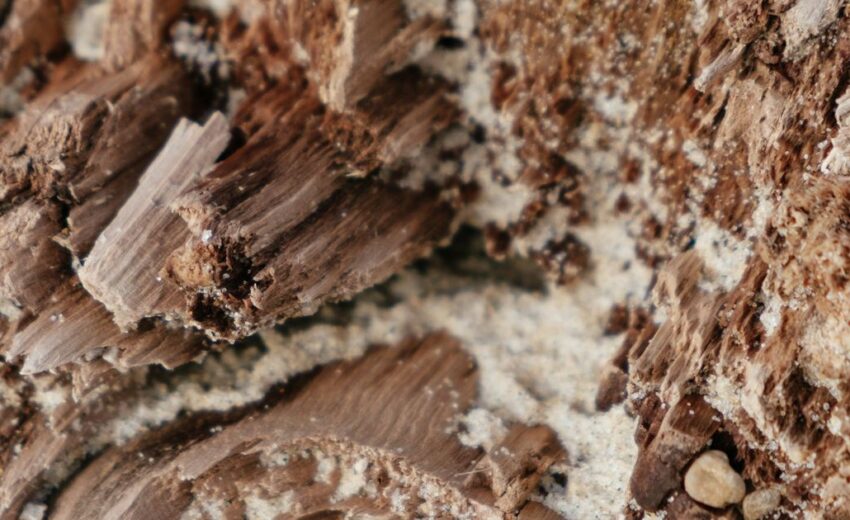
Inside a home, termites target timber and anything made from wood or paper. That includes door frames, skirting, built in wardrobes, kitchen cabinets, wooden flooring and stored boxes. They eat from the inside out, so the surface often looks fine while the wood behind it is hollow.
Moisture makes the risk higher. Leaking pipes, damp walls, wet soil around foundations and poorly drained garden areas all help termites survive near a building. Garden beds, irrigation lines and timber stacked against walls also give them an easy bridge. That is why termite control looks at the site and its surroundings, not just the damaged item. Effective termite control therefore starts with understanding how the colony reaches the building.
Sanco lists termite infestations among the more complex pest issues it handles. Unlike a visible pest that can be treated where it is seen, termites need a plan that covers the soil, the structure and the routes in between.
Signs of Termite Activity to Check For
Termites rarely show themselves, so owners must look for the traces they leave behind. A short check of walls, frames and garden edges every few months can catch activity early. Early detection keeps repairs smaller and gives termite control a better chance of working before damage reaches structural timber.
Walk around the outside of the building first, then work through each room. Use a torch and pay attention to corners, joints and anywhere wood meets concrete.
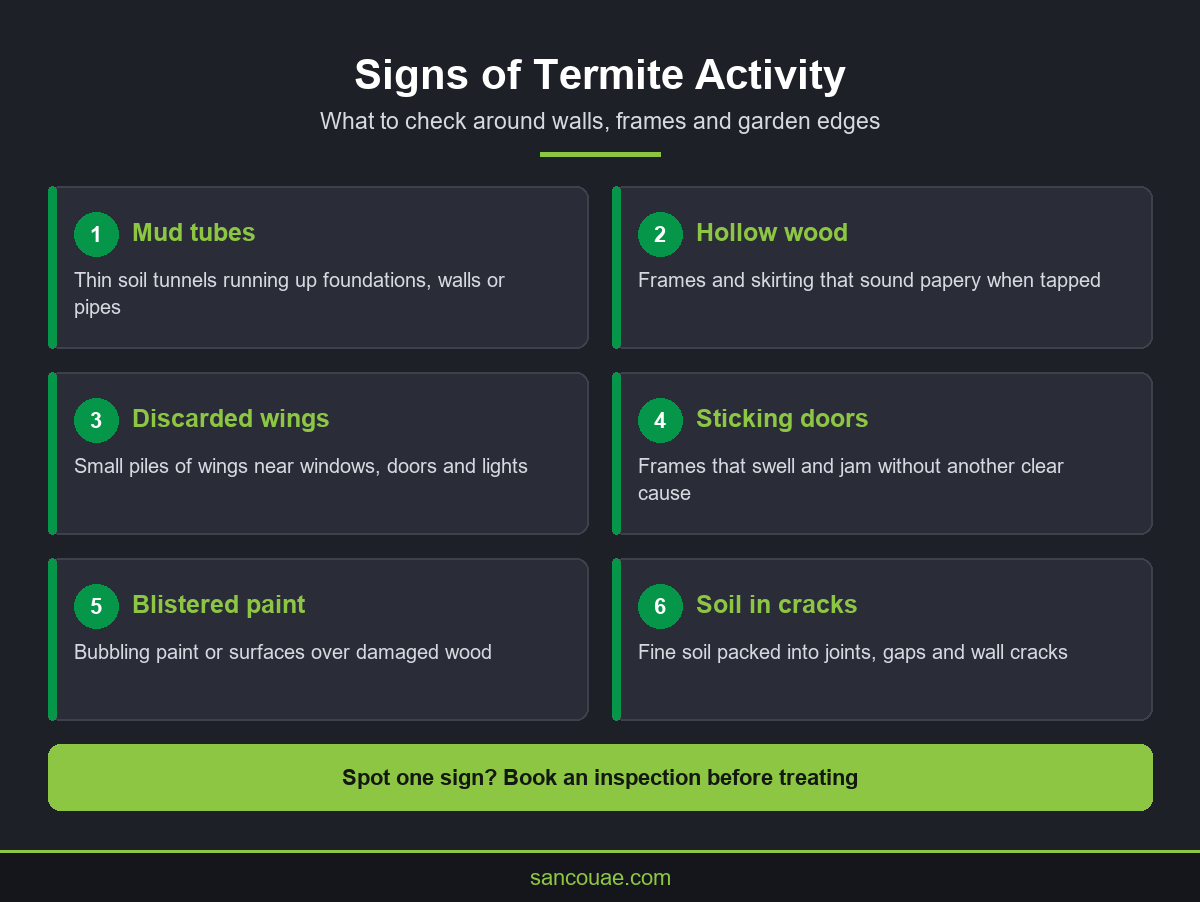
Mud tubes are the clearest outdoor sign. They look like thin brown lines of soil running up foundations, walls or pipes. If you break a small section and it is rebuilt within days, the colony is active.
Indoors, tap wooden frames and skirting with a screwdriver handle. Sound wood gives a solid knock, while damaged wood sounds hollow or papery. Doors and windows that suddenly stick can also point to termites, because damp from their activity makes frames swell.
Look for small piles of discarded wings near windows, doors and lights. These come from winged termites that leave a mature colony to start new ones. Blistered or bubbling paint, sagging floors and fine soil in cracks are further clues. If you see any of these, avoid spraying shop products on the spot. Disturbing the area can push termites deeper and make the inspection harder. Leave the evidence in place so a termite control technician can see it as it is.
Why Villas and New Buildings Need Anti Termite Treatment
Villas sit directly on soil, often with gardens, irrigation and timber fittings close to the walls. New buildings disturb soil during construction and add fresh wood and paper materials. Both conditions suit termites, so anti termite treatment is a common part of planning and maintaining these properties.
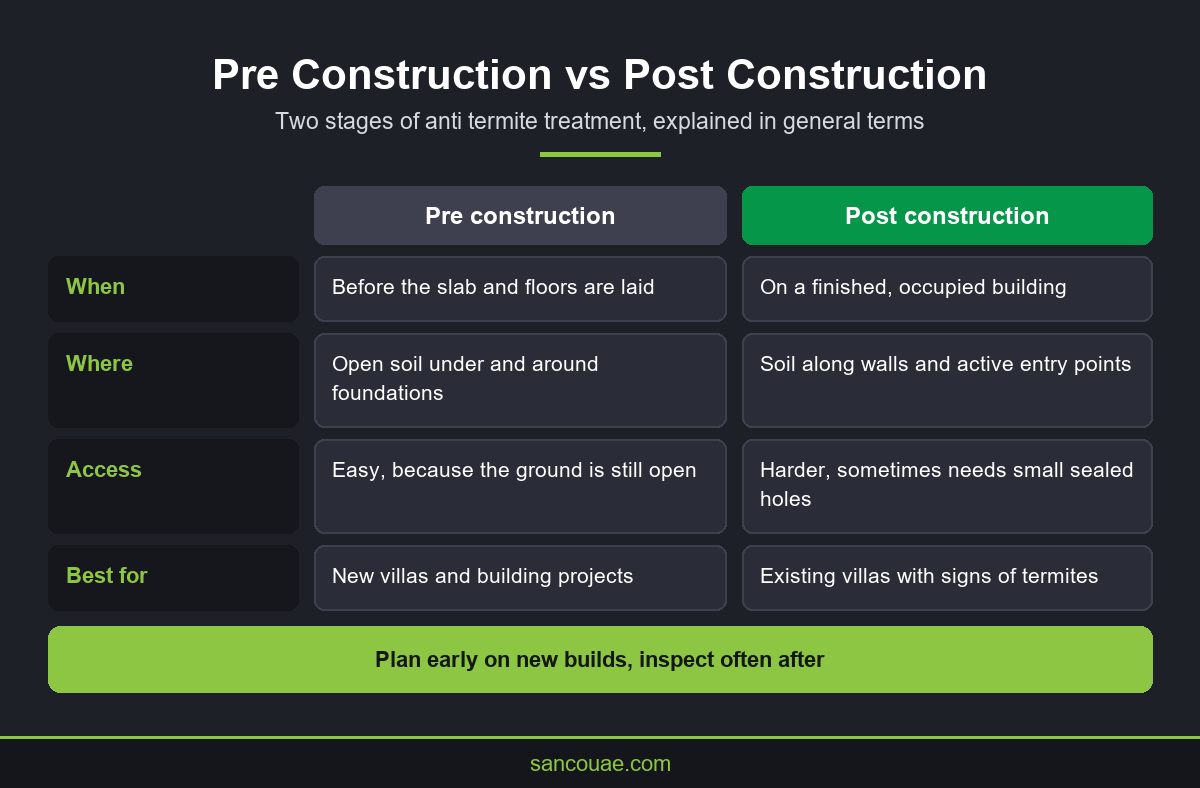
For a new building, treatment is easiest before construction is complete. This is often called pre construction treatment. In general terms, the soil under and around the foundations is treated before the slab and floors cover it. The aim is a protective zone that termites meet before they can reach the structure. Builders often schedule this termite control step alongside groundworks so it is not missed.
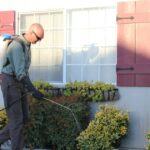
For an existing villa or building, the work is post construction treatment. The soil is no longer open, so technicians treat the ground along the outside of the foundations and target the points where termites are entering. In some cases they drill small holes at key spots to reach the soil below a floor, then seal them afterwards.
The right method depends on the building, the soil, the extent of activity and the materials used. Treatment products and techniques vary, so ask your provider to explain what they will use, where, and how it is applied safely around a family home. A clear explanation is part of good termite control, and a reliable provider will answer these questions before work starts.
Construction projects are one of the industrial site types Sanco serves, alongside warehouses and manufacturing plants. On the residential side, Sanco works with villas, apartments and communities. That covers both sides of termite control, from treatment during a build to protecting a home that has stood for years.
Inspection, Treatment and Follow Up With a Professional Team
Professional termite control follows a clear process: inspect the property, plan the treatment, apply it safely, seal the routes in and monitor the results. Sanco uses a five step process for its pest work, with follow up visits for up to one month after treatment to check that activity has stopped.
The process starts with a full inspection. Sanco’s trained technicians check every corner of the premises, inside and out, to identify signs of infestation and potential risk areas. For termites, that includes the garden, the base of walls, wooden fittings and any damp spots.
Next comes a tailored plan built around the pests and areas found. Treatment then uses the most appropriate solutions for the site, with eco friendly methods and products chosen for safety. Sanco’s services are not time based, and technicians work until the problem is resolved.
After treatment, Sanco seals entry points, cracks and gaps to prevent reinfestation. Clients receive a detailed service report with preventive maintenance recommendations. Hidden leaks under a villa can keep soil damp, so a CCTV drain survey can help find damaged pipes that need repair.
You can support the work between visits with simple habits:
- Fix leaking taps, pipes and AC drain lines near walls.
- Keep firewood, timber and cardboard away from the building.
- Leave a gap between garden soil and wooden fittings.
- Check frames and skirting every few months and note any changes.
Homeowners play a real part in termite control, because most risks around a villa come from water and stored wood.
These steps follow the EPA approach to safer pest control, which favors prevention and monitoring over repeated treatment. Sanco also offers annual contracts for year round protection and one time treatments for specific problems. You can see the full list of Sanco services for other property maintenance needs.
Conclusion
Termite control protects villas and new buildings from damage that often stays hidden until repairs are costly. Learn the signs, keep moisture and timber away from walls, and plan anti termite treatment early on new builds. For an existing home, book an inspection as soon as you see mud tubes or hollow wood. Sanco offers inspection, tailored treatment, proofing and follow up visits for villas, apartments, communities and construction projects. To arrange a free inspection and quotation, request a quote from Sanco today.
Frequently Asked Questions
What is termite control for a villa?
It is the inspection, treatment and monitoring needed to keep termites out of a villa and its wooden fittings. It usually treats the soil around the foundations, targets active entry points and includes follow up checks to confirm that activity has stopped.
What is the difference between pre construction and post construction treatment?
Pre construction treatment is applied to the soil before the slab and floors are laid on a new building. Post construction treatment protects an existing building by treating soil along the foundations and targeting the points where termites are entering.
What are mud tubes and why do they matter?
Mud tubes are thin tunnels of soil that termites build across walls, foundations and pipes. They protect the insects from light and dry air. Fresh or rebuilt tubes show an active colony, so they are a clear reason to book an inspection.
Can I treat termites myself with shop products?
Shop sprays may kill the termites you see but rarely reach the colony in the soil. Spraying can also push them deeper into walls and frames. A professional inspection finds the routes and the source before any treatment is chosen.
Do apartments need anti termite treatment?
Apartments are less exposed than villas because they do not sit directly on garden soil, but termites can still travel through building structures and damage wooden fittings. Sanco serves apartments and communities as well as villas, so an inspection can confirm the risk.
How long does Sanco follow up after termite treatment?
Sanco revisits for up to one month after treatment to monitor results and make adjustments if required. Clients also receive a detailed service report with preventive maintenance recommendations, so they know what to watch for after the follow up period ends.
Why does moisture increase termite risk?
Most termites that damage buildings need damp conditions to survive. Leaking pipes, wet soil near foundations and overwatered gardens help colonies thrive close to walls. Fixing leaks and improving drainage makes a property far less inviting to them.
How do I arrange a termite inspection with Sanco?
Send your property details through Sanco’s contact page to request a free inspection, consultation or quotation. Mention whether it is a villa, apartment or construction project and describe any signs you have already noticed around the property.
Is Sanco a Dubai company?
Yes. Sanco Environmental Services was established in 2012 and is based in Al Qusais, Dubai, serving properties across the UAE. You can read more about Sanco’s team and history before booking an inspection or a treatment visit.