


A CCTV drain survey uses a specially designed camera fed through your drains, so engineers can see blockages, leaks, cracks and root damage without digging. A CCTV drain survey answers the question jetting cannot: why did the drain fail, and what will fix it? This guide explains how the camera works and what it can find. It also covers what the survey report and recorded video include, and when to order one. It is written for facility managers, landlords and kitchen operators who want evidence before they approve repairs.
Key Takeaways
- A CCTV drain survey records live footage inside the pipe to diagnose blockages, leaks, loose joints, root damage and cracked pipes.
- Sanco shares a full survey report, recorded video, drain map and recommendations once the survey is complete.
- A CCTV drain survey company for commercial buildings should give you clear evidence before any digging or repair is approved.
How a CCTV Drain Survey Works
A CCTV drain survey works by feeding a specially designed camera down the drain while engineers watch live footage on a screen. They examine the pipe as the camera travels, then give instant feedback on site. The survey suits drains of all diameters in both commercial and domestic properties, whatever the size of the system.
The camera usually enters through an access point such as a manhole or inspection chamber. It is pushed or guided along the pipe and sends a continuous picture back to the engineer. Lights on the camera head show the pipe wall, the joints and any material lying along the bottom of the pipe.
Because the engineer sees the footage live, problems are spotted as the camera reaches them. Sanco’s engineers use this to explain the findings to you on site and recommend the next steps straight away. You do not have to wait for the report to know whether the line needs jetting, a repair or simply monitoring.
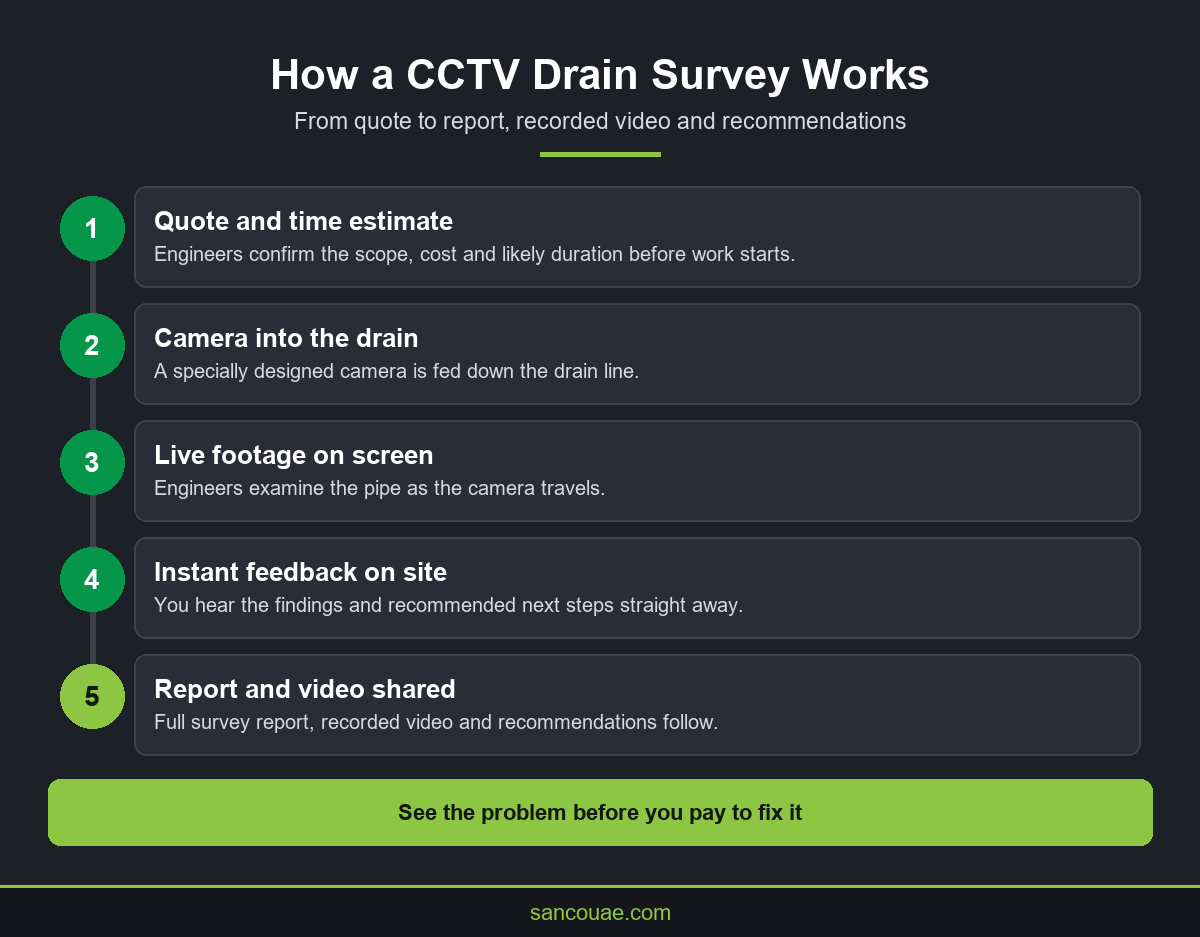
How long does it take? It depends on the length and the diameter of the drains. A small system can be completed within two hours, while a larger system takes longer. Before any work starts, Sanco’s engineers give a full quote and a time estimate, so you can plan access around your operations.
Camera inspection is a well established method for sewers and building drains around the world. A general overview of pipeline video inspection shows how the same technology is used on large public networks as well as single properties.
What a CCTV Drain Survey Can Find
A camera survey shows what is really happening inside the pipe, not just the symptoms at the sink or manhole. It can identify blockages, leaks, loose joints, cracked or collapsed pipes, tree root damage and signs of corrosion. That turns guesswork into a clear diagnosis before anyone digs up a floor or a car park.
Sanco’s surveys can diagnose a wide range of problems and highlight areas of weakness in the system. These include:
- Different forms of blockages, such as grease and debris
- Leaks and the causes of burst pipes
- Loose joints and displaced elements
- Cracked pipes and collapsed drains
- Tree root damage
- Corrosion and general wear and tear
- Animal intrusions
Each finding points to a different fix. A grease blockage in a sound pipe usually needs jetting and better FOG control. A loose joint or crack may leak wastewater into the ground and let roots or soil in. A collapsed section cannot simply be jetted clear and needs repair. The survey tells you which one you have.
Some faults only show up on camera. A slight dip in a pipe can hold water and grease, and a hairline crack may not leak enough to notice above ground. Finding these early means you can plan a repair before they cause a blockage or damp.
This is the real value of a CCTV drain survey. Without it, a contractor may jet the same line again and again, or dig in the wrong place. With it, you pay for the work the drain actually needs, and you have footage to show why.
Surveys help in kitchens too. Grease that settles at a displaced joint or a damaged section keeps catching debris. The camera shows these spots, so the maintenance plan can target them instead of treating the whole system the same way.
What the Survey Report and Recorded Video Include
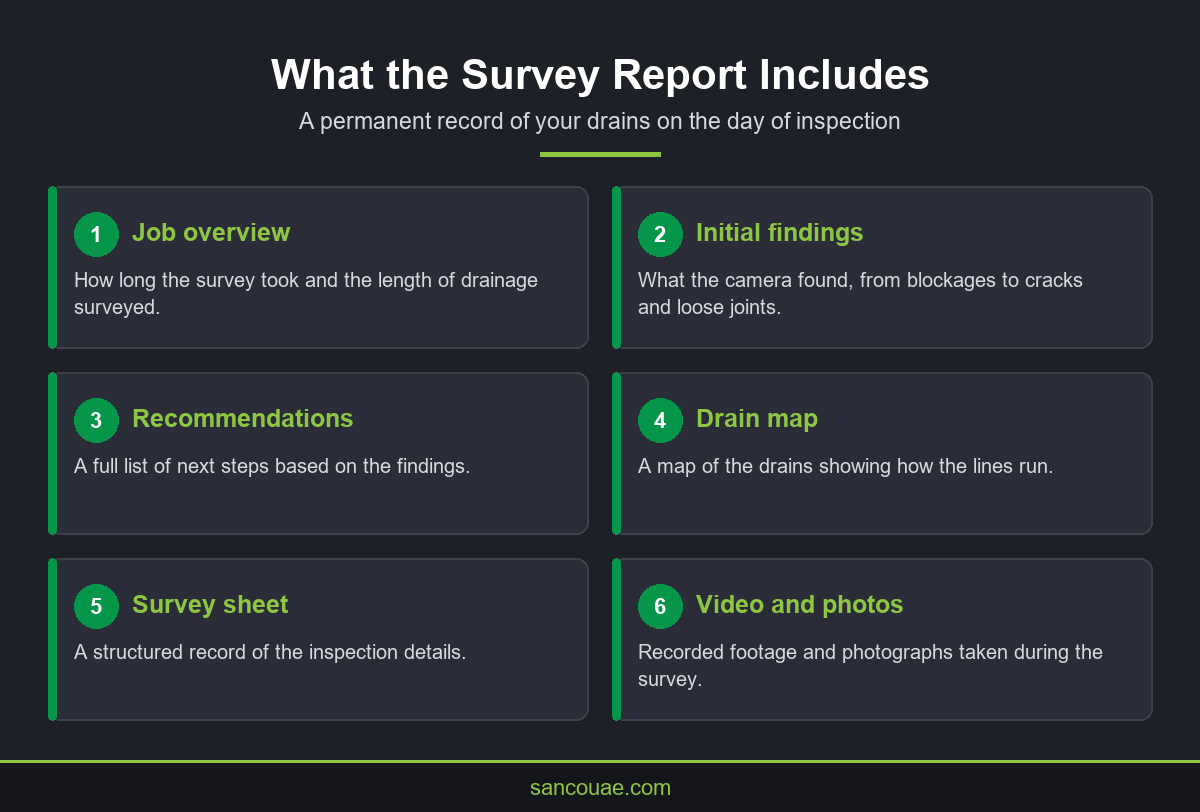
After the survey, Sanco shares a full CCTV drain survey report, the recorded video and a set of recommendations. The report gives an overview of the job and the findings, a map of the drains and a survey sheet. Together they give you a permanent record of the condition of your drains on the day of the inspection.
Sanco’s service page sets out what the report contains:
- An overview of the survey job, including how long it took
- The length of drainage surveyed
- Initial findings from the inspection
- A full list of recommendations based on the findings
- A map of the drains and a survey sheet
- Video and photographic footage taken during the survey
Why does this matter? A verbal opinion is hard to act on and harder to share. A written report with footage lets a facility manager brief the owner, compare repair quotes and plan the budget. It also gives future contractors a reference point, so they know where the access points are and how the lines run.
Keep the report with your building maintenance records. When you order a follow up survey after repairs, you can compare the new footage with the old. That shows whether a problem is stable, getting worse or fixed.
Ask for the footage in a format you can store and share. Each finding in the report should link to a point on the drain map, so anyone reading it can find the fault on site. If a recommendation is unclear, ask the engineer to explain it before you approve any work.
When to Order a CCTV Drain Survey
Order a CCTV drain survey when a drain keeps blocking, when smells or damp suggest a hidden leak, or before you buy, lease or renovate a property. It is also useful after major works and as part of planned maintenance. The aim is to find a problem early, before it becomes costly and disruptive.
Common triggers include:
- The same line blocks again soon after high pressure drain jetting, and you need to know why.
- Persistent smells or damp patches near drains point to a leak or a broken joint.
- Several fixtures drain slowly at once, which suggests a problem in the main line.
- You are about to buy, lease or fit out a commercial unit and want to check its drains.
- Construction or heavy works have taken place near buried pipes.
Backups that seem to start in the drains sometimes begin further along the system. A full sewage tank or sump pit can slow drainage across a whole building. If the survey rules out a pipe defect, scheduled sump pit and sewage tank cleaning may be the real fix. Left alone, a failing system can lead to a sewage overflow, which is a hygiene and environmental risk.
Kitchens with recurring grease blockages should combine a survey with source control. The camera finds the problem spots, while regular grease trap cleaning reduces the grease that reaches them. The Dubai Municipality grease trap guideline requires traps to be cleaned regularly and at least twice a month.
When choosing a CCTV drain survey company for commercial buildings, ask what you will receive. You should get live feedback on site, a written report, recorded video and clear recommendations. Sanco’s CCTV drain survey covers each of these, with a quote and time estimate before work begins.
Conclusion
A CCTV drain survey replaces guesswork with evidence. The camera shows blockages, leaks, root damage and broken pipes as they really are. The report and video then give you a record you can act on. Use a survey when drains keep blocking, before you dig, or when you take on a new property. Sanco’s engineers will explain the findings on site and recommend a suitable solution. Book a drain camera inspection with Sanco and get a clear answer before you spend on repairs.
Frequently Asked Questions
What is a CCTV drain survey?
A CCTV drain survey is a camera inspection of the inside of your drains. Engineers feed a specially designed camera down the pipe and watch live footage on a screen to find blockages, leaks, loose joints, root damage and cracked pipes.
How long does a CCTV drain survey take?
It depends on the length and diameter of the drains. A small system can be completed within two hours, while a larger system takes longer. Sanco provides a full quote and time estimate before any work is carried out.
What does the survey report include?
The report gives an overview of the job, including how long it took, the length surveyed and initial findings. It also includes recommendations, a map of the drains, a survey sheet, and the video and photographic footage from the survey.
Can a camera survey find a leak?
Yes. The camera can show cracked pipes, loose joints and displaced sections where wastewater escapes, and it can help trace the causes of leaks and burst pipes. Smells or damp patches near drains are a good reason to book one.
Is a CCTV survey suitable for small domestic drains?
Yes. Sanco’s surveys can be carried out on drains of all diameters and suit both commercial and domestic properties. The engineers adapt the approach to the size of the system, from a single villa line to a large building network.
Should I jet the drain or survey it first?
If the line is blocked and overflowing, clearing it usually comes first. If blockages keep returning or the pipe may be damaged, survey first. The footage shows whether jetting will help or whether a repair is needed.
Do I get to see the footage?
Yes. Engineers watch the live footage on site and give instant feedback and recommendations. Once the analysis is complete, Sanco shares the recorded video of the drain system together with the full survey report and recommendations.
How much does a CCTV drain survey cost?
Price depends on how long the survey takes, which in turn depends on the drain length, pipe diameter and property type. For an accurate figure, contact Sanco’s office with details of your site and the team will advise.
What other drainage services does Sanco offer?
Alongside camera surveys, Sanco provides drain jetting, sewage tank and sump pit cleaning, tanker service and grease trap work. You can browse the full list of Sanco services and combine them into one maintenance plan for your site.