

Rodent control for restaurants and warehouses works best as prevention plus treatment. You block the way in, remove food and shelter, then treat and monitor any activity that remains. Good rodent control starts with spotting the signs early, because rats and mice hide well and breed fast. This guide covers those signs, the usual entry points, the waste and storage habits that keep a site clean, and what a professional visit involves. It draws on how Sanco’s pest management team inspects, treats and proofs food and storage sites in Dubai.
Key Takeaways
- Rodent control in food and storage sites works best when proofing, clean waste areas and tidy storage come before any treatment.
- A professional rodent control visit should include a full inspection, a tailored plan, safe treatment, sealing of entry points and follow up monitoring.
- Droppings, gnaw marks, grease smears and noises at night are early signs that need prompt action.
Signs of Rodents in Restaurants, Food Stores and Warehouses
Rats and mice are mostly active at night, so staff usually find the evidence before they see the animals. Knowing the common signs helps a site manager act early. At that stage activity is often limited to one area, and stock, wiring and packaging have not yet suffered serious damage.
Walk the site with a torch once a week. Check quiet areas behind equipment, under shelving and around waste rooms. Look for these signs:
- Droppings along walls, in drawers, behind fridges or on top of stored sacks.
- Gnaw marks on packaging, pallets, door edges, cables and plastic pipes.
- Dark grease smears where rodents rub against walls, beams and pipe runs.
- Shredded paper, cardboard or fabric gathered into nests in hidden corners.
- Scratching or running sounds in ceilings, walls or cable trays at night.
- Torn bags or spilled grain, flour and powder in dry stores.
In a restaurant, the usual hot spots are dry stores, the floor under cooking lines and the space behind fridges, where motors keep things warm. In a warehouse, check pallet racking, loading bays and the edges of stacked goods that rarely move. Rodents follow the same routes every night, so signs tend to cluster along walls.
Rodents can contaminate food and surfaces with droppings and urine. They also chew through packaging and wiring. For a food business, that is a hygiene problem and a stock loss at the same time. One sighting in daylight often points to a larger hidden population, so treat it as a reason to book an inspection. Early rodent control is simpler and less disruptive than dealing with an infestation that has spread to several rooms.
Entry Points and Proofing: Keeping Rodents Out
Proofing means closing the gaps that let rodents into a building, and it is the most lasting part of rodent control. Mice squeeze through very small openings and rats climb pipes and cables with ease. A careful check of the building shell pays off long after any treatment has ended.
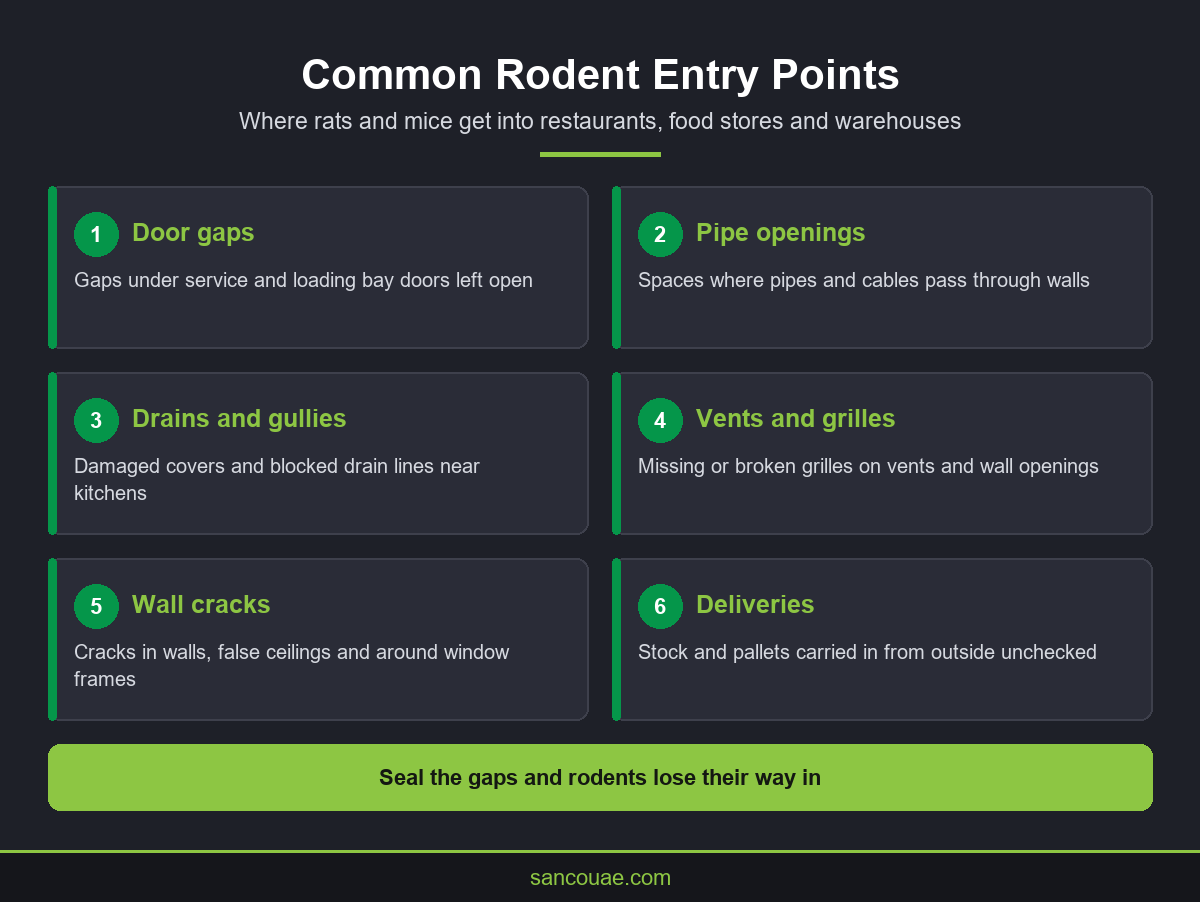
Common entry points in restaurants, food stores and warehouses include:
- Gaps under doors, especially rear service doors and loading bay doors left open during deliveries.
- Openings where pipes, drains and cables pass through walls and floors.
- Damaged drain covers, floor gullies and broken vent grilles.
- Cracks in walls, gaps around window frames and holes in false ceilings.
- Stock and pallets brought in from outside without a quick check.
Fit door sweeps or brush strips to external doors and keep those doors closed when not in use. Seal pipe and cable openings with hard materials, since rodents chew through soft fillers quickly. Replace damaged drain covers and grilles. Inside, keep a clear gap between stored goods and walls so staff can inspect the edges. Small repairs like these often do more for rodent control than any single treatment.
Proofing is also built into Sanco’s own process. After treatment, Sanco’s technicians seal entry points, cracks and gaps to prevent reinfestation. They then provide a detailed service report with preventive maintenance recommendations. The site team can use that report as a repair list and check it off over the following weeks.
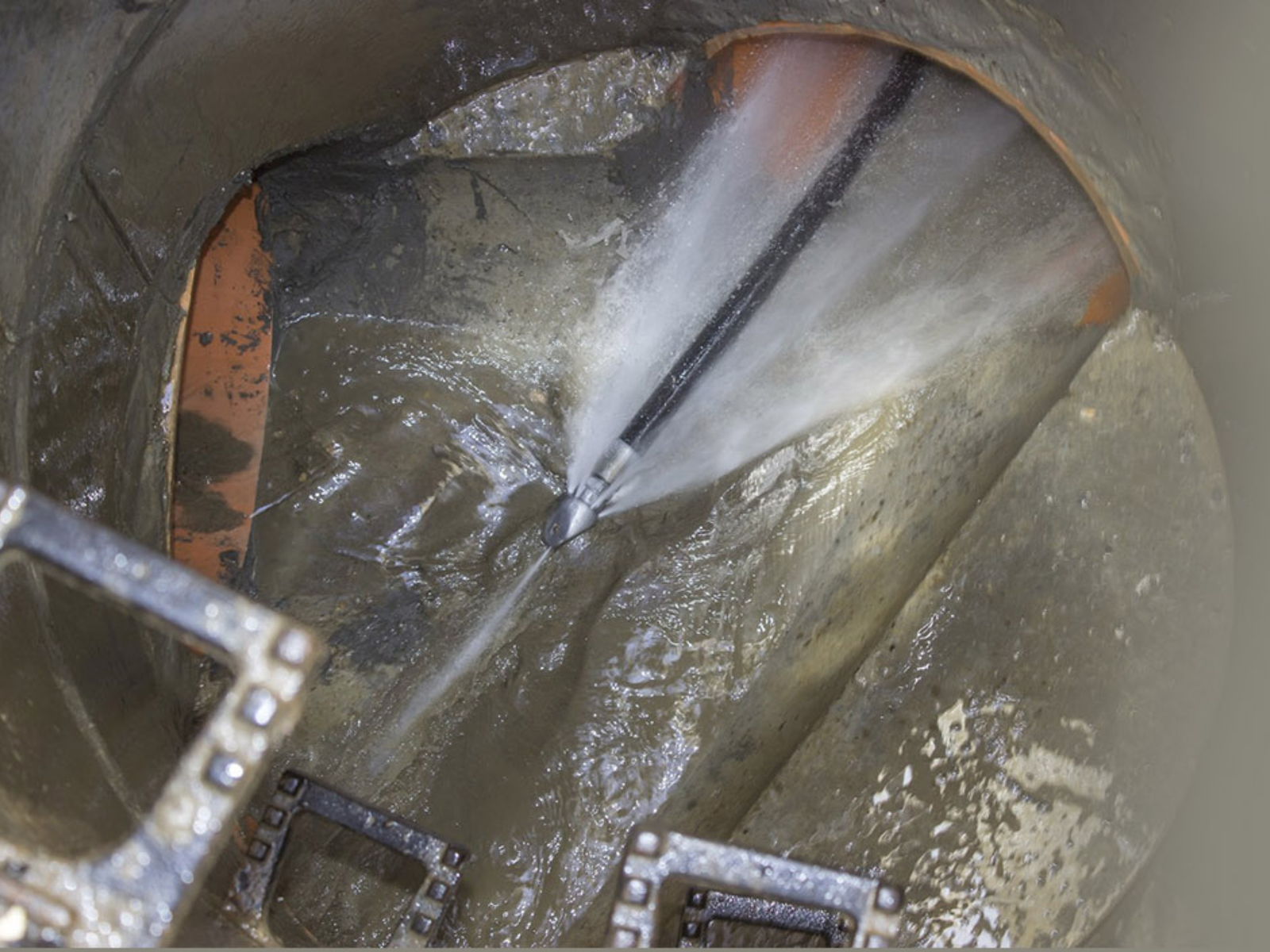
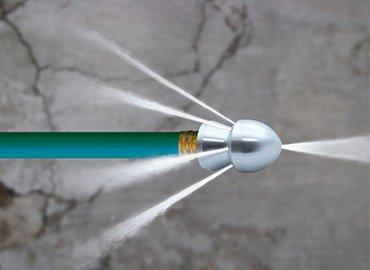
Drains need special attention in food sites. Rats can travel along drain lines, and blocked drains give them water and shelter close to the kitchen. Keeping lines clear with high pressure drain line jetting and keeping covers intact removes one more route into the building.
Waste and Storage Habits That Reduce Rodent Pressure
Rodents stay where they find food, water and shelter. Daily habits in the kitchen, the waste room and the store decide how attractive a site is to them. Good housekeeping is the part of rodent control that staff carry out every day, in the long gaps between professional visits.
Food waste is the biggest draw in any restaurant. Bins need tight lids, frequent emptying and a hard floor that is easy to wash. Waste rooms and garbage chutes collect grease and food residue over time. Sanco’s garbage hood cleaning service removes grease, odors and contaminants from these areas, which leaves less for pests to feed on.
Grease is another hidden food source. A grease trap that is overdue for emptying holds fats and food scraps, and the smell draws pests towards the drains. Booking regular grease trap cleaning keeps that waste from building up under the kitchen floor.
Storage habits matter just as much, especially in warehouses and dry stores:
- Store goods on shelves or pallets off the floor, with a gap from the walls.
- Keep dry food in sealed, hard containers rather than open sacks.
- Rotate stock so older goods do not sit untouched for months.
- Clear loose cardboard, empty pallets and clutter that give rodents a place to nest.
- Clean up spills of grain, flour or sugar on the same day.
Check deliveries before they go into storage, because rodents sometimes arrive inside packaging. Ask staff to report droppings or gnawed packaging straight away, and keep a simple sightings log. That log helps the technician spot patterns and focus treatment where it matters most. Over time, good records make rodent control more precise and help you judge whether new habits are working.
What a Professional Rodent Control Treatment Involves
A professional treatment follows a clear sequence of inspect, plan, treat, proof and monitor. Sanco uses this five step process for its pest work. For rodents, it means finding where the animals live and travel, choosing a safe method for a food site, and returning to confirm that activity has stopped.
Here is how the five steps apply to rodent control at a restaurant or warehouse:
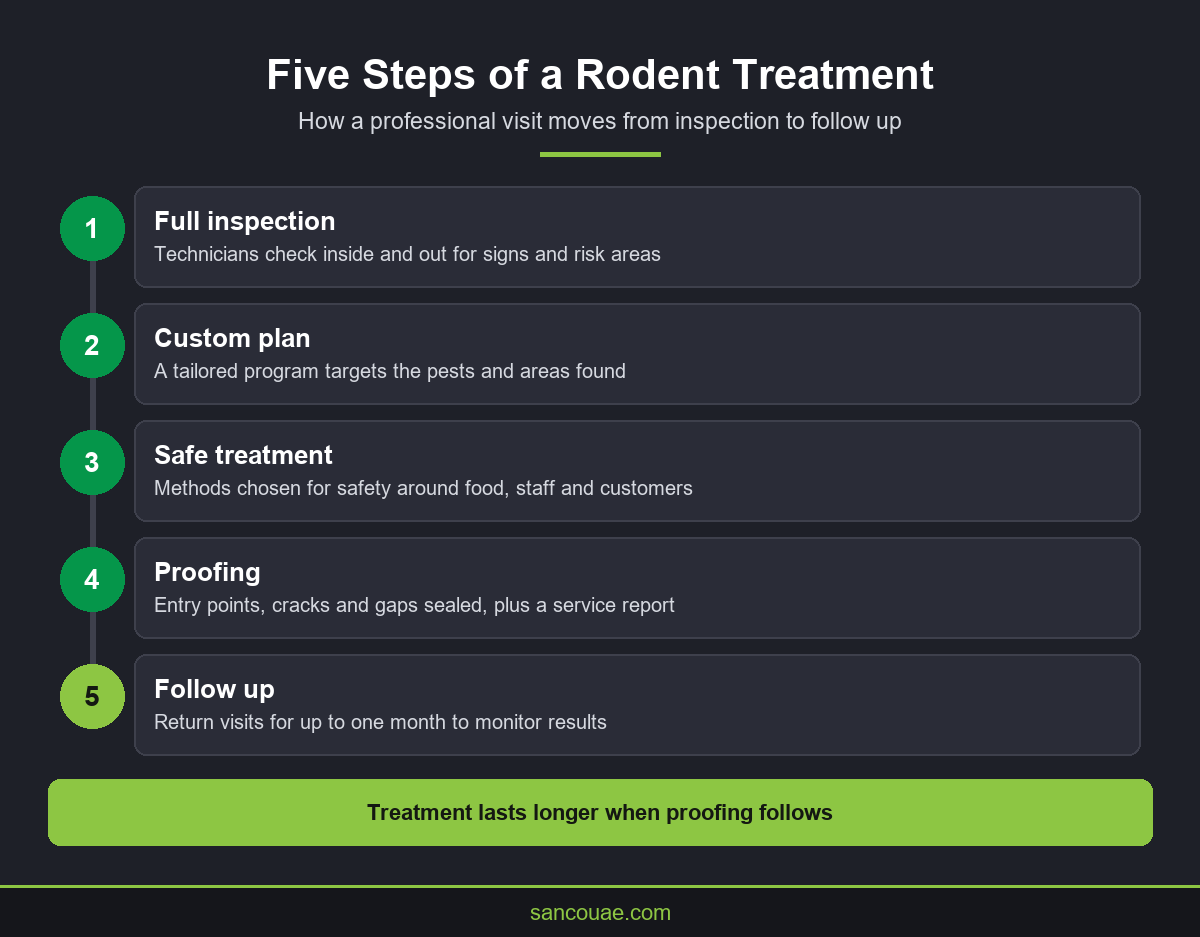
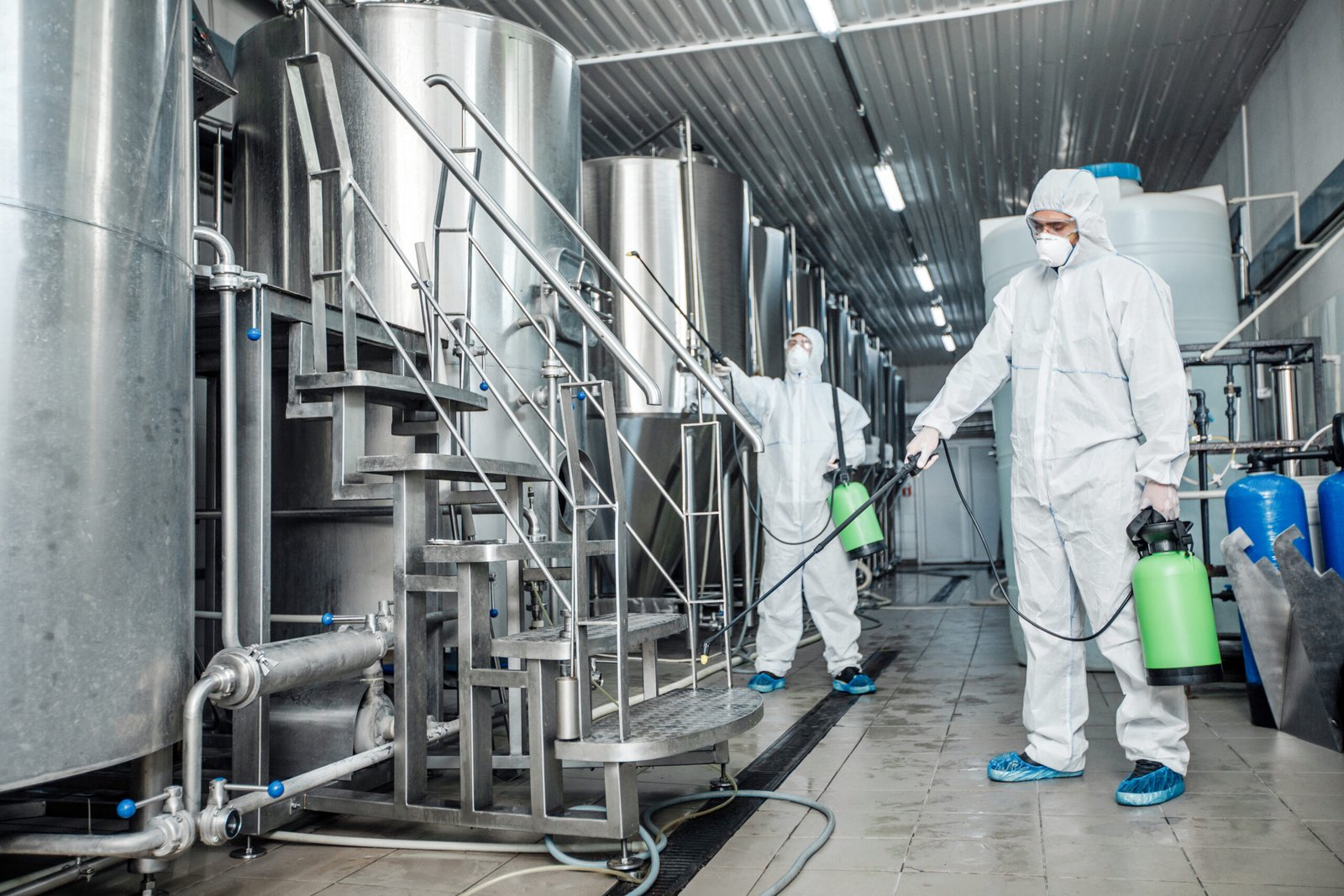
During the inspection, Sanco’s trained technicians check every corner of the premises, inside and out. They look for signs of infestation and potential risk areas. The plan that follows is tailored to the site and the pests found. In food areas, treatment uses methods and products chosen for safety around food, staff and customers.
Sanco’s services are not time based. Technicians work until the problem is resolved, rather than leaving once a set number of hours has passed. Proofing comes next, then monitoring. Sanco revisits for up to one month after treatment to check results and adjust the approach if required.
This mix of inspection, prevention, monitoring and targeted treatment follows the principles of integrated pest management. If baits are used, professionals should place and manage them. The US EPA guidance on rodenticides explains why careful placement protects children, pets and wildlife.
Businesses can choose an annual contract for year round protection or a one time treatment for a specific problem. For restaurants and warehouses with daily deliveries and waste, a contract keeps regular inspections on the calendar. Planned rodent control visits also catch new activity before it spreads to stock or equipment.
Conclusion
Effective rodent control in restaurants and warehouses combines prevention with treatment. Learn the signs, close the entry points and keep waste and storage areas clean every day. When activity appears, book a professional inspection and a tailored plan, followed by proofing and follow up visits. Sanco treats rodents for food processing units, restaurants, retail shops, hotels and warehouses across the UAE, using eco friendly methods and ongoing monitoring. To arrange a free inspection for your site, request a quote from Sanco today.
Frequently Asked Questions
What are the first signs of rodents in a restaurant?
Droppings, gnaw marks on packaging, grease smears along walls and scratching sounds at night are the most common early signs. Check dry stores, the space behind fridges and the floor under cooking lines first, because rodents prefer warm, hidden spots near food.
How does rodent control differ for a warehouse and a restaurant?
Restaurants focus on food waste, grease and kitchen equipment, while warehouses focus on pallet racking, loading bays and stored goods. Both need proofing, tidy storage and monitoring. The inspection routes and main risk areas are different at each type of site.
How do rodents get into commercial buildings?
They use gaps under doors, openings around pipes and cables, damaged drain covers, broken vents and cracks in walls. Some arrive inside deliveries. Sealing these routes after treatment is one of the most lasting ways to prevent a new infestation.
Is professional rodent treatment safe in food areas?
It should be. A professional plan uses methods and products chosen for safety around food, staff and customers. Any baits are placed where people and pets cannot reach them. Sanco uses eco friendly methods suited to restaurants, food stores and hotels.
How long does Sanco follow up after a rodent treatment?
Sanco revisits for up to one month after treatment to monitor results and make adjustments if required. Its services are not time based, so technicians keep working on the problem until it is resolved, rather than stopping when a set time passes.
Can good housekeeping replace professional treatment?
Housekeeping lowers the risk but rarely clears an established infestation on its own. Clean waste areas, sealed food containers and tidy storage help treatment work and keep rodents from returning. Most food and storage sites need both habits and professional help.
Should a food business choose an annual contract or a one time treatment?
A one time treatment suits a specific, recent problem. An annual contract gives year round protection with regular inspections, which suits restaurants and warehouses with daily deliveries and waste. Sanco offers both options, with flexible contracts tailored to each property.
How do I book a rodent inspection with Sanco?
You can arrange a free inspection, consultation or quotation by sending your site details through Sanco’s contact page. Share the type of premises, where you have seen signs and how long the problem has been going on.
Who is Sanco Environmental Services?
Sanco is a Dubai based environmental services company established in 2012. It offers pest control alongside grease trap, drain, kitchen exhaust and waste area services. You can read more about Sanco’s background and services before you book a visit.